Vaonis Vespera 3 vs Dwarf 3: Which Smart Telescope Should You Buy?
Our top picks
 Best value: 35 mm, 4K Starvis 2, built-in dual narrowband filter, EQ mode, 1.35 kg, about $549 (tripod extra)DWARFLAB Dwarf 3 Smart Telescope35 mm f/4.3 · 2.93° × 1.65° · 3 lb8.2Price tier: BudgetCheck price on Amazon
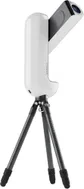 Best build and battery: 50 mm, 11 h (Vaonis), tripod and five-year warranty included, about $2,490Vaonis Vespera 3 Smart Telescope50 mm f/4.9 · 2.6° × 1.4° · 11 lb8.1Price tier: PremiumCheck price
The Dwarf 3 is the better buy for most people: about $549 buys a 4K smart telescope with a built-in dual narrowband filter, a solar filter and EQ mode. The Vaonis Vespera 3 is the better-built machine, with 50 mm of aperture, an 11-hour battery, a tripod and a five-year warranty, but at about $2,490 it costs 4.5 times as much. This Vaonis Vespera 3 vs Dwarf 3 comparison shows what the extra money actually buys.
We haven’t tested either telescope ourselves, and we found no outlet that has shot them side by side. The comparison draws on Vaonis’ and DWARFLAB’s spec pages, live Amazon prices from November 12, 2026, and reviews by Digital Camera World, Zelpio, BBC Sky at Night, Space.com and Astronomy.com. Early Black Friday sales may be running at some retailers, so check today’s price before you decide.
Quick verdict
| Dwarf 3 | Vespera 3 | |
|---|---|---|
| Best for | Value, travel, wildlife and astro in one | Build quality, all-night sessions, long projects |
| Amazon price (Nov 12, 2026) | About $549 | About $2,490 |
| Aperture / focal length | 35 mm / 150 mm (f/4.3) | 50 mm / 245 mm (f/4.9) |
| Our score | 8.2 | 8.1 |
| Pick if | You want the most telescope per dollar | Battery, tripod and warranty matter more than price |
Specs side by side
| Dwarf 3 | Vespera 3 | |
|---|---|---|
| Optics | 6-element apochromatic group | Flat-field apochromatic quadruplet, ULD glass, baffles |
| Main sensor | Sony IMX678 Starvis 2, 1/1.8-inch | Sony IMX585, 1/1.2-inch |
| Resolution / pixel | 3840 × 2160, 2 µm | 3840 × 2160, 2.9 µm |
| Pixel scale | About 2.75″ per pixel | About 2.44″ per pixel (Vaonis) |
| Field | About 2.93° × 1.65° (computed) | About 2.6° × 1.4° (Vaonis) |
| Wide camera | Sony IMX307, 1080p, 50.6° diagonal | None listed |
| Built-in filters | VIS, astro, dual narrowband (OIII 30 nm / H-alpha 15 nm) | None; sold separately |
| Solar filter | Included | Sold separately |
| Mount / EQ mode | Alt-az, EQ mode on a tripod head | Alt-az only, no EQ mode |
| Battery | 10,000 mAh, up to 5.5 h (DWARFLAB) | 11 h (Vaonis), about 12 h (Zelpio) |
| Weight | 1.35 kg, IP54 | About 5 kg, IP43 |
| Storage | 128 GB | 128 GB (115 GB usable) |
| Tripod included | No | Aluminum tripod |
| Warranty | 2 years | 5 years |
Our scores are editorial and weight image quality at 35%, ease of use 25%, portability 20% and value 20%.
Aperture, sensors and image quality
The Vespera 3’s 50 mm lens has (50 ÷ 35)², or about 2.04 times, the light-gathering area of the Dwarf 3’s 35 mm. Its 2.9 µm pixels are also larger than the Dwarf 3’s 2 µm ones. By our arithmetic, (pixel size ÷ f-number)² gives about 1.6 times more light per pixel for the Vespera 3 on extended objects such as nebulae. That is a paper estimate, not a measurement, and the Dwarf 3 can bin its pixels 2 × 2 to trade resolution for sensitivity.
Aperture sets how faint and how sharp you can go; focal ratio sets how fast an image builds. See how smart telescopes work.
The two sensors have the same pixel grid, 3840 × 2160, so output resolution is equal. The Dwarf 3 samples slightly coarser (about 2.75″ per pixel against 2.44″), which gives the Vespera 3 a small edge on fine detail in small galaxies. Vaonis also built the Vespera 3 around a new flat-field optical design with stray-light baffles, which should keep stars sharper to the edge of the frame, though we haven’t seen independent edge-of-field tests.
The only real-world signal we have comes from Digital Camera World, which saw the Andromeda Galaxy’s dust lanes on the Vespera 3 in about ten minutes and said that wasn’t a controlled test. Treat that as encouraging, not as proof of a gap. Zelpio’s main complaint is that the Vespera 3 takes no automatic dark frames, so hot pixels (green rows) can show in stacks and you may need to clean them up in processing.
Planets are a non-starter for both. Astronomy.com says the Dwarf 3’s 150 mm focal length is too short for detailed planetary images, and the Vespera 3 is not a planetary scope either: at 2.44″ per pixel Jupiter is about 18 pixels across, and on the same arithmetic about 16 on the Dwarf 3. Our planetary smart telescope guide explains what to expect.
Field of view
The Dwarf 3’s field of about 2.93° × 1.65° is wider than the Vespera 3’s 2.6° × 1.4°, a point many people don’t expect from the cheaper scope. (Vaonis’ own pages disagree slightly on the Vespera 3 field, so we use its launch-page figure.)
Wider fields fit big nebulae and Andromeda; narrower fields put more pixels on small galaxies. Try any target in the framing calculator.
In practice, neither frames the whole Andromeda Galaxy (about 3° long) comfortably in one shot. It slightly overflows the Dwarf 3’s frame and needs two panels on the Vespera 3. For bigger projects the Vespera 3’s CovalENS mosaics stitch up to 24 MP (about 4.3° × 2.4°), while the Dwarf 3 offers a 2 × 2 mosaic. Compare M31 on the Dwarf 3 with M31 on the Vespera 3, or try the FOV calculator with your own targets.
Battery, weight and portability
This is where the two scopes diverge most.
- Battery: Vaonis rates the Vespera 3 at 11 hours and Zelpio got about 12 hours in use, enough for a full night. DWARFLAB measured up to 5.5 hours for the Dwarf 3 at room temperature, but Digital Camera World got about four and BBC Sky at Night just over four in near-zero temperatures. DWARFLAB supports external power, so a 20,000 mAh power bank can cover a long night.
- Weight: 1.35 kg against about 5 kg. Digital Camera World measured 6 kg for the Vespera 3 with its tripod. The Dwarf 3 fits in a small bag; the Vespera 3 is a car-boot instrument.
- Weather: the Dwarf 3 is IP54-rated against dust and splashes, the Vespera 3 IP43. The Vespera 3 adds automatic anti-fog, which helps on damp nights.
Filters, EQ mode and the hidden costs
The sticker prices understate the gap. The Vespera 3 has no built-in filters, and Vaonis’ dual-band filter costs about $379. That listing is sold for “Vespera” and doesn’t confirm the Vespera 3, so check Vaonis’ compatibility list first (see our filters guide). The Dwarf 3 already has a dual narrowband filter and a solar filter in the box.
The Dwarf 3 needs a tripod, though. DWARFLAB’s mini tripod with hydraulic head is about $89 and also makes EQ mode easier, which removes field rotation for cleaner long stacks. The Vespera 3 is alt-az only and corrects rotation in software; see our EQ mode explainer.
| Rough all-in cost | Dwarf 3 | Vespera 3 |
|---|---|---|
| Telescope | About $549 | About $2,490 |
| Tripod | About $89 (DWARFLAB) | Included |
| Dual-band filter | Built in | About $379 (Vaonis) |
| Total | About $638 | About $2,869 |
Even with a tripod, the Dwarf 3 comes to roughly $638 all in, and the Vespera 3 with a dual-band filter to roughly $2,870. If you only image galaxies and clusters, you can skip the filter and the gap is about $1,850.
Apps and workflow
The Vespera 3 runs on Vaonis’ Singularity app and the Dwarf 3 on DWARFLAB’s own, and neither needs a subscription for core features, as far as we can tell. The Vespera 3’s best workflow feature is automatic multi-night capture: frame a target once and it resumes stacking on later nights, which suits faint nebulae that need many hours. Digital Camera World found its startup alignment took over five minutes.
Space.com found the Dwarf 3’s image capture time-consuming and wanted better instructions, while BBC Sky at Night still gave it four stars. The DWARFLAB app does more outside astronomy, including auto-tracking for wildlife and landscape shooting, which the Vespera 3 doesn’t attempt.
Who should buy which
Buy the Dwarf 3 if:
- you want the most capable telescope for under about $650 all in
- you travel, hike or hand-carry gear
- you want one device for the night sky and daytime wildlife
- you want EQ mode or a built-in narrowband filter
Buy the Vespera 3 if:
- you observe from a fixed spot and want it to run all night with no battery worries
- you want multi-night projects that resume automatically
- a tripod in the box, anti-fog and a five-year warranty are worth real money to you
Who should skip both: if you want 50 mm of aperture without the Vespera 3 price, the Seestar S50 Pro is about $999 with a built-in dual-band filter, EQ mode, tripod and case. See Seestar vs Vespera vs Unistellar for the brand-level picture, and our best smart telescopes of 2026 for the full ranking.
How to choose
- Set a total budget, not a sticker price. Add the tripod and filter each scope needs.
- Decide how you’ll carry it. If it will ever travel, 1.35 kg against 5 kg decides it.
- Think about your sky. From a light-polluted suburb, built-in narrowband filtering matters more than aperture. Check what’s realistic in our sky target checker and integration time tool.
- Be honest about how long you’ll image. The Vespera 3’s battery and multi-night mode pay off only if you run long sessions or projects.
- Not sure? Try the telescope matcher.
Caveats
Maker figures are lab numbers, and reviewers usually measure less battery, especially in the cold. The Amazon listing for the Vespera 3 on Nov 12, 2026 was sold by Adorama and had one rating, so there is little owner history. Prices change, particularly around early Black Friday, so verify the current price before buying.
For a closer look at the Dwarf 3’s main rival at its price, read Dwarf 3 vs Seestar S30 Pro. Fields and pixel scales for the Dwarf 3 are computed from its pixel grid, pixel pitch and focal length; the Vespera 3’s are Vaonis’ own figures. See how we research for our method.
Frequently asked questions
Is the Vaonis Vespera 3 better than the Dwarf 3?
Does the Vespera 3 have a built-in filter or EQ mode like the Dwarf 3?
Which has better battery life, the Vespera 3 or the Dwarf 3?
Can the Dwarf 3 or Vespera 3 photograph planets?
Is the Vespera 3 worth $2,490?
Sources
- DWARFLAB: Dwarf 3 product page · checked 2026-11-12 — 35 mm, 150 mm focal length, Sony IMX678 (2 µm, 3840 × 2160), 1.35 kg, IP54, 10,000 mAh battery measured up to 5.5 h, 128 GB, dual narrowband filter, 2 × 2 mosaic and EQ mode.
- BBC Sky at Night: DWARFLAB Dwarf 3 review · checked 2026-11-12 — Four-star review; the Dwarf 3's battery lasted over four hours in near-zero temperatures.
- Astronomy.com: Review of DWARFLAB's Dwarf 3 · checked 2026-11-12 — The Dwarf 3's 150 mm focal length is too short for detailed planetary imaging.
- Digital Camera World: Vaonis Vespera 3 review · checked 2026-11-12 — Saw Andromeda's dust lanes in about ten minutes (not a controlled test), found startup alignment took over five minutes, and measured 6 kg with the tripod.
- Zelpio: Vaonis Vespera 3 review · checked 2026-11-12 — The Vespera 3 takes no automatic dark frames, so hot pixels can show as green rows; real-world battery was about 12 h.
- Vaonis: Vespera new generation (Vespera 3 and Vespera Pro 2) · checked 2026-11-12 — Vaonis' launch-page figures for the Vespera 3: about 2.44″ per pixel and a 2.6° × 1.4° field.
- Vaonis: compare Vespera models · checked 2026-11-12 — Vespera models have no built-in filters; light-pollution, dual-band and solar filters are sold separately.
Get new guides by e-mail
One short e-mail when Smart Telescope Review publishes a new guide. No spam, no sharing your address, and you can unsubscribe in one click.