Best Smart Telescope for Planets (2026): The Honest Answer
Our top picks
 Best for planets overall (not a smart scope): 130 mm reflector with phone guidance, about $500Celestron StarSense Explorer DX 130AZ130 mm f/5 · Phone-guided (eyepiece) · 18 lb7.5Price tier: BudgetCheck price on Amazon
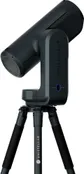 Best smart option for planets and small targets: 0.93″ per pixel, autofocus, about $2,079Unistellar Odyssey Smart Telescope85 mm f/3.9 · 0.75° × 0.56° · 8.8 lb7.6Price tier: PremiumCheck price
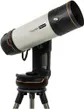 Most aperture in a smart scope: 152 mm RASA, about 37 px across Jupiter, about $4,299Celestron Origin Mark II Intelligent Home Observatory152 mm f/2.2 · 1.32° × 0.75° · 41.6 lb7.5Price tier: FlagshipCheck price
 Big aperture, automatic: 114 mm mirror, about 34 px across Jupiter, about $2,319Unistellar eQuinox 2 Smart Telescope114 mm f/4 · 0.76° × 0.57° · 15.4 lb7.4Price tier: PremiumCheck price
 Best all-rounder for the Moon and Sun: solar filter included, about $999ZWO Seestar S50 Pro Smart Telescope50 mm f/5.2 · 2.45° × 1.38° · 6.2 lb8.6Price tier: Mid-rangeCheck price
If you’re buying a telescope to see Saturn’s rings and the bands on Jupiter, here’s the honest answer: most smart telescopes are the wrong tool. They’re designed for wide fields of faint nebulae and galaxies, and planets are bright, tiny targets that need the opposite. ZWO says as much about its own Seestars, and reviewers who tried planets on small smart scopes found small discs and moons, not detail.
This guide explains why, shows how big Jupiter actually looks on each smart scope, and picks the five best options depending on how much you care about planets versus everything else. We haven’t tested these ourselves; the findings below come from named reviews, maker specs and our own pixel-scale math.
Why smart telescopes struggle with planets
Three things decide how much planetary detail you get.
Focal length. Most smart scopes use short focal lengths (150–260 mm on the Seestars and Dwarfs) so that big nebulae fit in one frame. A planet is a tiny target: Jupiter near opposition is only about 45 arcseconds across, roughly a fortieth of the full Moon’s width. Short focal lengths make it smaller still on the sensor.
Pixel scale. This is how much sky each pixel covers, in arcseconds: 206.265 × pixel size (µm) ÷ focal length (mm). The Seestar S50 Pro works out to about 2.3″ per pixel, so Jupiter covers about 20 pixels. The S30 Pro, at 3.74″ per pixel, gives about 12. The Unistellar Odyssey’s 0.93″ per pixel puts about 48 pixels on Jupiter. Our chart’s rule of thumb: under about 30 pixels you see belts and moons, not detail.
Seeing. Even with enough pixels, the atmosphere limits what you can resolve. Turbulence makes planets shimmer, and on bad nights fine detail simply isn’t there. Digital Camera World found Jupiter blurred on the Odyssey Pro and allowed that seeing may have been to blame. Dedicated planetary setups use long focal lengths and high magnification to make the most of steady moments, which isn’t what smart scopes are built for.
For comparison, at 150× through an eyepiece, Jupiter's ~45″ disc appears almost 2° wide, about four times the size the full Moon looks to the naked eye. See best smart telescope for planets.
Try it yourself in the framing calculator: switch scopes and watch Jupiter’s pixel count change.
What reviewers found
The pattern is consistent across outlets:
- Seestar S30 Pro: BBC Sky at Night captured Jupiter and its Galilean moons, but planets were “too small to show any detail.” Fstoppers saw Jupiter as a small dot.
- Seestar S50 Pro: ZWO says it’s not suitable for planets, and Digital Camera World advises serious planetary imagers to look elsewhere.
- Dwarf 3: Astronomy.com says the 150 mm focal length is too short for planetary detail; Space.com didn’t get crisp planets.
- Dwarf Mini: Live Science called its planetary images disappointing (while rating its solar and lunar images excellent).
- Vespera II: Space.com lists no usable planetary imaging as a con.
1. Celestron StarSense Explorer DX 130AZ: Best for planets overall
The StarSense Explorer DX 130AZ isn’t a smart telescope, and that’s the point. It’s a traditional 130 mm f/5 Newtonian reflector with Celestron’s phone dock: your phone plate-solves the sky through the scope’s mirror and shows arrows to guide you to targets. You then look through a real eyepiece, live, with no stacking delay.
That’s what planets need. At 150× through an eyepiece, Jupiter’s disc appears almost 2° wide to your eye, about four times the size the full Moon looks unaided. Celestron’s spec sheet gives a highest useful magnification of 307×. The catch: the included eyepieces stop at 65×, and Space.com’s reviewer needed a separate Barlow lens for Mars. Space.com and BBC Sky at Night both rated it 4 out of 5.
It can’t track, take photos of faint nebulae or stack images, and it weighs 18 lb complete. For about $500, it’s the best planetary value here. Check the DX 130AZ price. For safe Sun viewing, add Celestron’s EclipSmart filter for 130 mm reflectors after measuring your tube. Tighter budget? The StarSense LT 114AZ (about $240) includes a 2× Barlow, and Space.com found Saturn good with it.
2. Unistellar Odyssey: Best smart option for planets and small targets
If you want a smart telescope and care about planets more than big nebulae, the Unistellar Odyssey samples finest of the automatic scopes: an 85 mm reflector at 320 mm with about 0.93″ per pixel, putting roughly 48 pixels across Jupiter. Autofocus and no collimation keep it simple.
The caveats are real. Space.com calls the Odyssey line not ideal for planets, the output is only about 3.4–4.1 MP depending on the source, and the narrow 45′ × 34′ field rules out big nebulae and the whole Andromeda Galaxy. Its strengths are small galaxies, globular clusters and planetary nebulae. The solar filter is extra. About $2,079; check the Odyssey price.
3. Celestron Origin Mark II: Most aperture in a smart scope
The Origin Mark II is a 152 mm f/2.2 RASA with about 1.2″ per pixel, which puts roughly 37 pixels across Jupiter. Its six-inch aperture is the largest of any smart scope here. But the RASA is built for speed on faint deep-sky targets, not magnification: Space.com praised how quickly it builds galaxy images, and the reviews we read focus on deep sky rather than planets.
There’s also no solar option at all, and it weighs 41.6 lb. Buy it as the best deep-sky imager that happens to show planets a little better than small scopes. About $4,299; check the Origin Mark II price.
4. Unistellar eQuinox 2: Big aperture, fully automatic
The eQuinox 2 uses a 114 mm mirror at 450 mm and samples at about 1.33″ per pixel, roughly 34 pixels on Jupiter. It has an 11-hour battery (Unistellar’s figure) and Space.com’s 2026 roundup names it best smart telescope overall.
For planets, the limits are the same as the Odyssey’s plus some: manual focus, user collimation, and BBC Sky at Night found its images “a little soft.” Pick it for faint small galaxies first. About $2,319; check the eQuinox 2 price.
5. Seestar S50 Pro: Best all-rounder for the Moon and Sun
The Seestar S50 Pro is here because many “planet” shoppers really want the whole Solar System experience: the Moon’s craters, sunspots and a peek at Jupiter’s moons, plus nebulae and galaxies. The Moon fits easily in its 2.45° × 1.38° field, the solar filter comes in the box, and Jupiter shows as a roughly 20-pixel disc with its moons in a line.
Don’t expect surface detail on the planets. For everything else under $1,000, it’s our best overall pick. Check the S50 Pro price. Our guide to photographing the Sun covers solar safety.
Smart scope, traditional scope, or both?
Finds, tracks and stacks for you; shows color and faint nebulae on a phone in minutes, even from suburbs. Small apertures and short focal lengths make planets tiny. No eyepiece on most models.
Typical: 30–50 mm, $420–$1,000; 85–152 mm, $2,000–$4,300You look through an eyepiece and push the tube by hand; the phone app tells you where. Planets and the Moon look sharp and live. Galaxies and nebulae are faint gray smudges by eye.
Typical: 114–130 mm, $240–$500The most capable and flexible route: separate mount, telescope, camera and laptop. Steep learning curve and usually $2,000+ for a capable starter kit.
Outside this guide's scopeFull comparison in smart telescope vs traditional telescope.
Plenty of observers end up with both: a small smart scope for nebulae and galaxies, and a traditional reflector for planets and the Moon. Together, a Seestar S30 Plus (about $474) and a DX 130AZ (about $500) cost less than one Unistellar Odyssey. Our smart telescope vs traditional telescope guide walks through that decision.
How we chose
We ranked on how much planetary detail each option can realistically show, using pixel scale computed from each maker’s pixel size and focal length, then checked those numbers against what named reviewers actually saw. Ease of use, price and Moon/Sun capability broke ties. The full method is on how we research.
Frequently asked questions
Can a smart telescope see planets?
Which smart telescope is best for Jupiter and Saturn?
Why are smart telescopes bad at planets?
Is a smart telescope good for the Moon?
Can the Celestron Origin Mark II photograph the Sun?
Sources
- BBC Sky at Night: ZWO Seestar S30 Pro review · checked 2026-11-12 — Planets were too small to show any detail, though the reviewer captured Jupiter and its Galilean moons.
- Digital Camera World: ZWO Seestar S50 Pro review · checked 2026-11-12 — Advises anyone serious about planetary imaging to look elsewhere.
- Astronomy.com: DWARFLAB Dwarf 3 review · checked 2026-11-12 — The 150 mm focal length is too short for detailed planetary views.
- Space.com: Celestron StarSense Explorer DX 130AZ review · checked 2026-11-12 — Rated it 4 out of 5; the supplied eyepieces top out at 65× and Mars needed a separate Barlow.
- Digital Camera World: Unistellar Odyssey Pro review · checked 2026-11-12 — Found Jupiter blurred, while allowing that atmospheric seeing may have been to blame.
- Space.com: Unistellar Odyssey review · checked 2026-11-12 — Calls the Odyssey line not ideal for planetary observation.
Get new guides by e-mail
One short e-mail when Smart Telescope Review publishes a new guide. No spam, no sharing your address, and you can unsubscribe in one click.