The 7 Best Smart Telescopes of 2026: Ranked for Backyard, Travel and Budget
Our top picks
 Best overall: 50 mm ED apochromat, 8.3 MP sensor, dual-band filter, tripod and solar filter included, about $999ZWO Seestar S50 Pro Smart Telescope50 mm f/5.2 · 2.45° × 1.38° · 6.2 lb8.6Price tier: Mid-rangeCheck price on Amazon
 Best for travel: 1.65 kg, 4K sensor and the widest field here, about $664ZWO Seestar S30 Pro Smart Telescope30 mm f/5.3 · 3.99° × 2.24° · 3.6 lb8.5Price tier: Mid-rangeCheck price
 Best value: 4K Starvis 2 sensor, EQ mode and daytime wildlife use, about $549DWARFLAB Dwarf 3 Smart Telescope35 mm f/4.3 · 2.93° × 1.65° · 3 lb8.2Price tier: BudgetCheck price
 Best budget: the cheapest current Seestar, with tripod, case and solar filter, about $474ZWO Seestar S30 Plus Smart Telescope30 mm f/5.3 · 2.66° × 1.5° · 3.6 lb8.2Price tier: BudgetCheck price
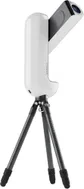 Best premium build and battery: new flat-field optics, 11 h battery, five-year warranty, about $2,490Vaonis Vespera 3 Smart Telescope50 mm f/4.9 · 2.6° × 1.4° · 11 lb8.1Price tier: PremiumCheck price
 Most aperture for automatic viewing: 114 mm mirror and 11 h battery, about $2,319Unistellar eQuinox 2 Smart Telescope114 mm f/4 · 0.76° × 0.57° · 15.4 lb7.4Price tier: PremiumCheck price
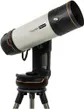 Best image quality: 6-inch f/2.2 RASA home observatory, about $4,299Celestron Origin Mark II Intelligent Home Observatory152 mm f/2.2 · 1.32° × 0.75° · 41.6 lb7.5Price tier: FlagshipCheck price
A smart telescope finds targets by plate-solving the sky, tracks them, and stacks short exposures into a color image on your phone while you watch. In 2026 ZWO replaced the best-selling Seestar S50 with the S50 Pro and the S30 with the S30 Plus, Vaonis launched the Vespera 3 and Pro 2, and Celestron’s Origin gained a mosaic mode. This ranking sorts through all of it.
We haven’t tested these telescopes ourselves. This is a research-based ranking built from manufacturer spec pages, live Amazon listings and independent reviews from outlets such as BBC Sky at Night, Space.com, Digital Camera World, Live Science and AstroBackyard. Where a test result appears, we name the outlet. Prices are what Amazon showed on November 12, 2026, and they move often (especially around Black Friday), so check today’s price before you buy.
The shortlist
| Rank | Telescope | Aperture / f | Field (native) | Weight | Price | Best for |
|---|---|---|---|---|---|---|
| 1 | Seestar S50 Pro | 50 mm f/5.2 | 2.45° × 1.38° | 2.8 kg | ~$999 | Best overall |
| 2 | Seestar S30 Pro | 30 mm f/5.3 | 4.0° × 2.2° | 1.65 kg | ~$664 | Travel |
| 3 | Dwarf 3 | 35 mm f/4.3 | 2.9° × 1.65° | 1.35 kg | ~$549 | Value |
| 4 | Seestar S30 Plus | 30 mm f/5.3 | 2.66° × 1.5° | 1.65 kg | ~$474 | Budget |
| 5 | Vespera 3 | 50 mm f/4.9 | 2.6° × 1.4° | 5 kg | ~$2,490 | Premium build and battery |
| 6 | eQuinox 2 | 114 mm f/4 | 46′ × 34′ | 7 kg | ~$2,319 | Aperture, automatic viewing |
| 7 | Origin Mark II | 152 mm f/2.2 | 1.32° × 0.75° | 18.9 kg | ~$4,299 | Image quality |
Seestar and Dwarf fields are computed from the sensor and focal length. Weights exclude tripods except for the Origin. The chart plots every model we cover by score against price.
Hover or tap a dot for details. Full numbers are in the comparison chart.
1. Seestar S50 Pro: Best overall
The Seestar S50 Pro is the smart telescope we’d recommend to most people. It keeps what made the original S50 the default choice (50 mm aperture, one-tap GoTo, live stacking, a solar filter in the box) and fixes its weak points. ZWO moved to a four-element ED apochromat, an 8.3 MP OmniVision sensor instead of 2 MP, and added a 63° wide-angle camera, EQ mode with the TH10 head and a 10,000 mAh battery that ZWO rates at up to 9 hours.
The box includes a carbon tripod, hard case, solar filter and a built-in dual-band (H-alpha/OIII) filter. Digital Camera World measured well over six hours of battery. Live Science found the tripod very short and spotted typos in the app, and AstroBackyard notes the battery drops in the cold and that the switch away from a Sony sensor “has caused controversy.”
The catch is price. Astronomy.com reported an $899 introductory price, and it now sits at about $999, double what the S50 cost at the end. It also isn’t a planet scope: ZWO says so, and Digital Camera World agrees. For galaxies, nebulae, the Moon and the Sun under $1,000, nothing else matches it. Check the S50 Pro price. If you were shopping for the old model, see Seestar S50 discontinued: what to buy.
2. Seestar S30 Pro: Best for travel
The Seestar S30 Pro puts a 4K Sony IMX585 sensor behind a 30 mm four-element ED apochromat and weighs 1.65 kg. Its 160 mm focal length gives the widest native field here, about 4° × 2.2°, so the whole Andromeda Galaxy fits in one frame, where the S50 Pro and Vespera 3 need two panels. A 4K, 63° wide camera stitches 8K Milky Way panoramas, and the duo-band filter, dark filter, anti-dew heater and solar filter are all included.
Fstoppers points out that capture continues if the app disconnects; Digital Camera World flags full reliance on the phone app and frequent data downloads. BBC Sky at Night captured Jupiter and its moons but no planetary detail. The physics limit is aperture: 30 mm collects about a third of the light of 50 mm, so faint galaxies take longer.
At about $664 it’s the scope to pack for a trip and a strong first scope for anyone short on space. Check the S30 Pro price, or read Seestar S30 Pro vs S50 Pro if you’re torn.
3. Dwarf 3: Best value
The Dwarf 3 is the most versatile small smart telescope. DWARFLAB pairs a 35 mm, six-element lens group with a 4K Sony IMX678 Starvis 2 sensor, adds a wide-angle camera, a dual narrowband filter and a magnetic solar filter, and wraps it in a 1.35 kg, IP54 body. It does EQ mode (by tilting the unit on a tripod head), 60-second exposures and 2 × 2 mosaics by DWARFLAB’s figures, and it doubles as an auto-tracking wildlife and landscape camera in daylight.
BBC Sky at Night gave it four stars and got over four hours from a charge in near-zero temperatures; Digital Camera World also measured about four hours, below the 5.5-hour maker figure. Space.com found capture time-consuming and wanted better instructions, and Astronomy.com says the 150 mm focal length is too short for planetary detail. Budget for a tripod, since none comes in the box.
At about $549 it undercuts the S30 Pro with a bit more aperture. Check the Dwarf 3 price, and see Dwarf 3 vs Seestar S30 Pro for the head-to-head.
4. Seestar S30 Plus: Best budget
The Seestar S30 Plus launched on November 10, 2026, as ZWO’s new entry model, replacing the original S30 (High Point Scientific lists that one as discontinued). It uses the same 30 mm four-element apochromat and 1.65 kg body as the S30 Pro, but swaps the 4K Sony sensor for a 2K SmartSens chip and drops wide-angle mosaics, Milky Way panoramas, dual-camera capture and comet stacking.
You keep a built-in duo-band filter, EQ mode with the optional TH10 and TC20, and a mini tripod, case and magnetic solar filter in the box for about $474. It’s too new for independent written reviews, so we rank it on specs. Check the S30 Plus price. Our S30 Plus vs S30 Pro comparison explains whether the $190 step up is worth it.
5. Vaonis Vespera 3: Best premium build and battery
The Vespera 3, launched April 11, 2026, pairs what Vaonis describes as a new flat-field apochromatic quadruplet with stray-light baffles and the same Sony IMX585 found in cheaper rivals. The rest is premium: an 11-hour battery (Zelpio got about 12 hours in use), 115 GB of usable storage, automatic anti-fog, multi-night projects that resume stacking automatically, an aluminum tripod and a five-year warranty.
Digital Camera World saw Andromeda’s dust lanes in about ten minutes, though it notes that wasn’t a controlled test, and found startup alignment took over five minutes. Zelpio points out there are no automatic dark frames, so hot pixels can show. There’s no EQ mode and no built-in filter, so a dual-band filter is extra.
At about $2,490 it’s for buyers who value build, battery and warranty over value per dollar. Check the Vespera 3 price.
6. Unistellar eQuinox 2: Most aperture for automatic viewing
The eQuinox 2 is the biggest aperture you can get in a fully automatic smart telescope at this price: a 114 mm Newtonian at f/4, which collects more than four times the light of a 50 mm lens. Unistellar rates the battery at up to 11 hours and the limiting magnitude at 18.2, and its free app includes NASA and SETI citizen-science campaigns. Space.com’s 2026 roundup names it best smart telescope overall.
It’s also the oldest design here: manual focus, user collimation, a narrow 46′ × 34′ field with no mosaic mode, and software-only light-pollution reduction. BBC Sky at Night found images “a little soft” and that third-party USB-C cables didn’t charge it. Pick it for faint, small galaxies and shared views on a tablet. Check the eQuinox 2 price.
7. Celestron Origin Mark II: Best image quality
The Origin Mark II is a 6-inch f/2.2 Rowe-Ackermann Schmidt Astrograph with autofocus, a dew heater, a filter drawer and an upgraded Sony IMX678 Starvis 2 camera. Space.com found 5–10 minute stacks enough for crisp galaxies. A free app update in October 2026 added mosaic capture, which matters on a 1.32° × 0.75° field: Andromeda takes a 3 × 2 grid.
It’s a home observatory: 41.6 lb complete, BBC Sky at Night measured about three hours of battery near freezing and found you can’t pause and resume a session, and Space.com notes audible motors. There’s no solar option, so never point it at the Sun. Check the Origin Mark II price, or compare it in Celestron Origin vs Seestar.
Field of view: the spec that decides what you can frame
Field of view decides which targets fit. Wide fields suit big nebulae and Andromeda; narrow fields put more pixels on small galaxies.
Wider fields fit big nebulae and Andromeda; narrower fields put more pixels on small galaxies. Try any target in the framing calculator.
The Pleiades need two panels on the S50 Pro, while the S30 Pro frames them in one shot. Unistellar’s 45′-wide field can’t frame Andromeda at all, and it has no mosaic mode to fix that. Try your own targets in the framing calculator. If galaxies and nebulae are your main goal, our guide to the best smart telescope for deep sky ranks these scopes by aperture, field and filters.
What Space.com picks, and where we differ
Space.com’s roundup (updated November 4, 2026) names the eQuinox 2 best overall, the eVscope 2 for larger budgets, the S50 Pro for value on smaller budgets, the Vespera II for mid-range, the Vespera Pro for resolution, the Odyssey Pro for versatility, the S30 Pro for portability and the Origin Mark II for deep sky.
We agree on the S30 Pro and the Origin. We rank the S50 Pro first because it costs less than half as much as the eQuinox 2, frames far more sky, and includes filters and EQ mode. The original Vespera Pro is now discontinued.
Also worth a look
- Vespera Pro 2 (about $2,990): a 12.5 MP square sensor at about 1.7″ per pixel, automatic darks and manual control on the Vespera 3’s new optics. No independent written review yet.
- Unistellar Odyssey (about $2,079) and Odyssey Pro (about $3,679): 85 mm with autofocus and no collimation, the easiest Unistellars. The Pro adds a Nikon electronic eyepiece for star parties.
- eVscope 2 (about $3,999): the eQuinox 2 plus a Nikon eyepiece, for outreach.
- Dwarf Mini (about $419): 840 g with a solar filter and dual narrowband filter, but a 2 MP sensor and no tripod.
- Vespera II (about $1,590): well made, but worth it only on a clear discount against the S50 Pro.
Not a smart telescope, but…
If Saturn’s rings and Jupiter’s belts are what you want, a small smart scope will disappoint you. The Celestron StarSense Explorer DX 130AZ is a traditional 130 mm reflector that uses your phone to point you at targets, and it shows planets live through an eyepiece far better than any 30–50 mm smart scope, for about $500. It can’t track, stack or photograph faint nebulae. Our best smart telescope for planets guide covers the trade-off in detail.
How we chose
Every model starts with the same data: optics, sensor, computed field and pixel scale, battery, weight, filters, solar support, EQ mode, app and Amazon price, cross-checked against the maker’s page and at least one independent review. Scores weight image quality and optics at 35%, ease of use and app at 25%, portability and build at 20%, and value at 20%. The full method is on how we research.
Still unsure?
The telescope matcher filters every model by budget, sky and targets, and the sky target checker shows what each scope can reach from your location. New to all this? Start with are smart telescopes worth it.
Frequently asked questions
What is the best smart telescope in 2026?
Is the original Seestar S50 still worth buying?
Can a smart telescope show planets?
Do smart telescopes need a subscription?
How much should I spend on a smart telescope?
Sources
- Space.com: The best smart telescopes · checked 2026-11-12 — Space.com's roundup (updated Nov 4, 2026) names the eQuinox 2 best overall, the S50 Pro best value for small budgets, the S30 Pro best for portability and the Origin Mark II best for deep sky.
- Astronomy.com: ZWO unveils the Seestar S50 Pro · checked 2026-11-12 — Reported an $899 introductory price and a $999 list price from September 15, with a 9-hour battery and 128 GB storage.
- BBC Sky at Night: ZWO Seestar S30 Pro review · checked 2026-11-12 — Planets were too small to show detail, but the reviewer captured Jupiter and its Galilean moons.
- Space.com: Celestron Origin Mark II review · checked 2026-11-12 — Found 5–10 minute stacks enough for crisp galaxy images; noted the motors are audible.
- Digital Camera World: Vaonis Vespera 3 review · checked 2026-11-12 — Saw the Andromeda Galaxy's dust lanes in about ten minutes (not a controlled test); startup alignment took over five minutes.
- High Point Scientific: ZWO Seestar S50 (discontinued) · checked 2026-11-12 — Lists the original Seestar S50 as discontinued.
Get new guides by e-mail
One short e-mail when Smart Telescope Review publishes a new guide. No spam, no sharing your address, and you can unsubscribe in one click.