Vespera II specs
| Brand | Vaonis |
|---|---|
| Type | Smart telescope |
| Aperture | 50 mm |
| Focal length / ratio | 250 mm, f/5 |
| Optics | Apochromatic quadruplet with field corrector |
| Sensor | Sony IMX585 (1/1.2-inch) |
| Resolution | 3840 × 2160 px (8.3 MP) |
| Pixel size / scale | 2.9 µm · 2.39″ per pixel |
| Field of view | 2.5° × 1.4°. Vaonis figure (2.39″ per pixel). |
| Mount | Motorized alt-az. No EQ mode |
| Battery | About 4 h (Vaonis); T3 lists the 4-hour battery as a con |
| Weight | 11 lb (5 kg). 48 × 20 × 9 cm; IP43 |
| Storage | 25 GB |
| Filters | None built in; light-pollution, dual-band and solar filters sold separately |
| Solar | Optional solar filter. Vaonis sells a solar filter separately |
| Mosaic mode | Yes. CovalENS mosaics up to 24 MP, 4.33° × 2.43° |
| Planets | Not recommended by maker |
| Eyepiece | No (view on phone or tablet) |
| App | Singularity (iOS/Android) |
| Subscription | No subscription found on Vaonis' site |
| Warranty | 3 years per Vaonis' comparison page |
| Price | About $1,590 on Amazon (Nov 12, 2026) · $$$ Premium |
- Vaonis' Vespera II page lists 25 GB of storage; its comparison page says 28 GB.
- Both Amazon listings on Nov 12, 2026 were third-party sellers (Focus Camera at $1,590 and Adorama at $1,719), not Vaonis directly.
- Space.com tested it in a Bortle 5 town with the light-pollution filter.
Amazon listings and bundles
Each option is a separate Amazon listing. Prices are typical street prices, not live.
| Option | What's different | Price |
|---|---|---|
| Vespera II Exploration Station | Telescope bundle sold by Focus Camera | Check price |
| Vespera II with adjustable tripod | Bundle sold by Adorama | Check price |
Specs are compiled from manufacturer pages, Amazon listings and independent reviews, and may change with firmware or production runs. Confirm what's in the box (tripod, solar filter, case) on the Amazon page before buying.
Vaonis Vespera II Smart Telescope video review

Video by Cuiv, The Lazy Geek on YouTube. Independent creator content, shown as a reference. It is not part of our scoring.
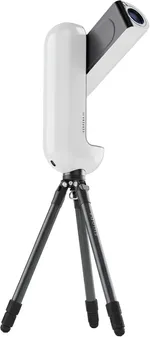
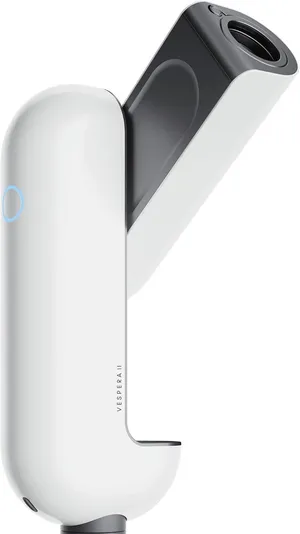
The Vespera II is Vaonis’ 50 mm smart telescope from 2023: an apochromatic quadruplet with a field corrector (250 mm, f/5), a 4K Sony IMX585 sensor and the polished Singularity app, in an IP43 weather-resistant body. On Amazon it’s sold by third-party dealers: about $1,590 for Focus Camera’s Exploration Station bundle and about $1,719 for Adorama’s bundle with an adjustable tripod (Nov 12, 2026); check today’s price. Space.com’s 2026 roundup picks it for the mid-range. We haven’t tested it ourselves; this review draws on Space.com, T3, BBC Sky at Night and ScopeTrader (see how we research).
Who the Vespera II is for (and who should skip it)
It’s for buyers who like Vaonis’ clean design and app and want the lowest Vespera price, mainly for nebulae and galaxies from a home base.
Skip it if value matters most. ScopeTrader points out that rivals which include filters or EQ tracking cost less, and the Seestar S50 Pro offers similar aperture and resolution plus a built-in dual-band filter, EQ mode and a nine-hour battery for about $600 less. Skip it too if you want planets or long nights on one charge.
Imaging in practice
BBC Sky at Night rated the Vespera II 4.5 out of 5. Space.com tested it from a Bortle 5 town with Vaonis’ light-pollution filter fitted, a fair real-world setup for a suburban buyer.
Both Space.com and T3 say it isn’t for planets, and Space.com lists the lack of usable planetary imaging as a con. At 2.39 arcseconds per pixel, Jupiter comes out roughly 19 pixels across.
The native field is about 2.5° × 1.4°. The Andromeda Galaxy needs two panels, which Vaonis’ CovalENS mosaic mode handles: it stitches up to 24 MP, covering about 4.33° × 2.43°. Images export as 16-bit FITS or TIFF for processing elsewhere. Plan your framing in the FOV calculator and check what your sky allows with the sky target checker.
App and workflow
The Singularity app is the Vespera’s strength: simple, refined and free, with no subscription we could find on Vaonis’ site. You choose a target, the scope finds it and live-stacks, and CovalENS mosaics run from the same app.
The practical limits are battery and storage. Vaonis quotes about four hours, which T3 lists as a con, and storage is 25 GB (Vaonis’ comparison page says 28 GB), so long mosaic nights need planning. There’s no EQ mode and no automatic anti-fog; Space.com also found the tripod short. At 5 kg, it’s heavier than any Seestar or Dwarf.
What you’ll need beyond the box
- A filter for suburban skies. The Vaonis Dual Band filter (H-alpha and OIII) is the big upgrade for emission nebulae, and the Vespera detects it automatically. The broadband Vaonis CLS filter is cheaper but helps far less against white LED lighting. Our filter guide explains the difference.
- Dew control. The Vaonis hygrometer sensor triggers the built-in demister automatically, a worthwhile add-on for the Vespera II specifically.
- Solar. Vaonis sells a solar filter separately; never point the scope at the Sun without one. ISO 12312-2 eclipse glasses are for your own eyes.
- A tripod, if your bundle doesn’t include one; check the listing.
- A red flashlight, such as the Celestron Night Vision.
How it compares
Default on every smart scope: sharp stars, natural color. Use for galaxies, clusters and the Moon.
Passes only the two colors emission nebulae glow in and blocks most light pollution, including LEDs. Big gains on nebulae; useless for galaxies and clusters.
Cuts sodium and mercury streetlight lines while keeping star color. Modest help under old-style lighting, little under white LEDs.
Blocks 99.999%+ of sunlight at the front of the scope for sunspots. Must be a certified full-aperture filter, never at the eyepiece end.
Which to buy for your scope: best filters for smart telescopes.
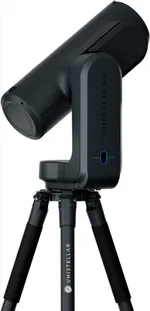
The Vaonis Vespera 3 fixes the Vespera II’s weak points: new flat-field optics, an 11-hour battery, more storage, automatic anti-fog and a five-year warranty, for about $2,490. The Seestar S50 Pro gives similar aperture with built-in filters and EQ mode for about $999. The Unistellar Odyssey offers 85 mm and autofocus with a much narrower field.
Our Seestar vs Vespera vs Unistellar comparison weighs the three brands, and smart telescopes for light-polluted cities covers filter choices for bright skies.
Bottom line
The Vespera II is still a well-made smart telescope with a good sensor, a clean app and a weather-resistant body. In late 2026 it’s squeezed between the cheaper, better-equipped S50 Pro and Vaonis’ own Vespera 3. Buy it only on a clear discount, and budget for a dual-band filter. Check the Vespera II price on Amazon.
See what the Vespera II can capture from your sky in the sky target checker, or frame any target in the field-of-view calculator.
Accessories for the Vespera II
Official and compatible add-ons sold on Amazon: filters, solar filters, tripods and wedges, power banks, dew control and cases. Check the listing confirms your exact model before you buy.
- FilterVaonis Vespera Dual Band filter (AC022)Official Vaonis
H-alpha + OIII dual narrowband filter that the Vespera detects automatically, for nebulae from light-polluted skies. Sold for 'Vespera'; Vaonis' newer Vespera 3 and Pro 2 listings don't confirm this exact part. Check the maker's compatibility list before ordering.
- FilterVaonis Light Pollution (CLS) filter for VesperaOfficial Vaonis
Broadband light-pollution filter that threads onto the Vespera (78 mm thread) to cut sodium and mercury-vapor glow while keeping star color. Broadband filters help far less with modern white LED light pollution than dual-band filters do.
- Dew controlVaonis Vespera hygrometer sensorOfficial Vaonis
Measures humidity and temperature to trigger the Vespera's built-in demister automatically. Vaonis lists automatic anti-fog as built in on the Vespera 3 and Pro 2, so this is mainly an upgrade for the Vespera II.
- SolarCelestron EclipSmart universal solar filter (75–100 mm)Universal fit
Adjustable ISO 12312-2 compliant film filter for objectives with an outside diameter of 75–100 mm, such as spotting scopes and some traditional telescopes. Too big for 30–50 mm smart scopes; use the maker's own solar filter on those.
- SolarThousand Oaks black-polymer solar filter sheet, 4 × 4 inUniversal fit
DIY solar film for making a secure full-aperture filter cell for a small scope or camera lens. Only for confident DIYers: the cell must fit tightly over the front so it can't blow off. Never use a filter at the eyepiece end.
- SolarSoluna ISO 12312-2 solar eclipse glasses (2-pack)Universal fit
For looking at the Sun with your own eyes while the scope images it; never look through a telescope with them.
- PowerAnker 737 power bank, 24,000 mAh, 140 WUniversal fit
USB-C PD power bank big enough to run a 30–50 mm smart scope through a long winter night, when cold cuts battery life. Check your scope's manual for supported USB-C input while observing; Unistellar, Vaonis and Celestron Origin use their own batteries and chargers.
- PowerUGREEN Nexode 100 W power bank, 20,000 mAhUniversal fit
Cheaper USB-C PD bank that also tops up your phone, which runs the telescope's app all night.
- ObservingCelestron Night Vision red LED flashlightUniversal fit
Dimmable red light keeps your dark adaptation for finding cables, levels and the tripod at night.
Compatibility checked November 2026. More in our smart telescope accessories guide.