The Best Filters for Smart Telescopes: Built-In, Dual-Band, Broadband and Solar
Our top picks
 Best built-in filter set: UV/IR-cut, dual-band, dark and an included solar filter, about $999ZWO Seestar S50 Pro Smart Telescope50 mm f/5.2 · 2.45° × 1.38° · 6.2 lb8.6Price tier: Mid-rangeCheck price on Amazon
 Best value: built-in dual narrowband (15 nm H-alpha) and solar filter, about $549DWARFLAB Dwarf 3 Smart Telescope35 mm f/4.3 · 2.93° × 1.65° · 3 lb8.2Price tier: BudgetCheck price
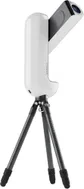 Premium pick that needs filters: no built-in filters, optional dual-band and solar, about $2,490Vaonis Vespera 3 Smart Telescope50 mm f/4.9 · 2.6° × 1.4° · 11 lb8.1Price tier: PremiumCheck price
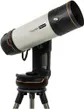 Biggest scope with a filter drawer: takes 1.25-inch and 2-inch filters, about $4,299Celestron Origin Mark II Intelligent Home Observatory152 mm f/2.2 · 1.32° × 0.75° · 41.6 lb7.5Price tier: FlagshipCheck price
Filters are where smart telescope brands differ most, and where buyers waste the most money. Some scopes come with everything you need built in. Others leave you to buy the one filter that matters most for city nebulae. And plenty of add-on filters on Amazon either don’t fit your scope or don’t help the targets you care about.
This guide sorts it out: what each brand includes, what the main filter types do, and which add-ons actually fit which telescope. It’s research-based (we haven’t tested these filters ourselves), using maker spec pages, retailer pages and the accessory listings we checked on Amazon on November 12, 2026. Prices change, so check today’s price before you buy.
The four filter types, briefly
Default on every smart scope: sharp stars, natural color. Use for galaxies, clusters and the Moon.
Passes only the two colors emission nebulae glow in and blocks most light pollution, including LEDs. Big gains on nebulae; useless for galaxies and clusters.
Cuts sodium and mercury streetlight lines while keeping star color. Modest help under old-style lighting, little under white LEDs.
Blocks 99.999%+ of sunlight at the front of the scope for sunspots. Must be a certified full-aperture filter, never at the eyepiece end.
Which to buy for your scope: best filters for smart telescopes.
UV/IR-cut (clear). The default on every smart scope that has a filter wheel. It keeps stars sharp and colors natural. Use it for galaxies, clusters and the Moon.
Dual-band or narrowband (H-alpha + OIII). Emission nebulae glow mostly in two narrow colors: deep red hydrogen-alpha and teal oxygen-III. A dual-band filter passes those and blocks most other light, including much of the glow from LED streetlights. Narrower passbands block more skyglow: First Light Optics describes the Optolong L-eXtreme’s two 7 nm passbands with nothing transmitted between H-beta and OIII. The built-in filters on Seestar and Dwarf scopes are wider (15–30 nm).
Broadband light-pollution (CLS, L-Pro). These cut the specific spectral lines of old sodium and mercury-vapor streetlights while keeping most starlight. They help modestly under that kind of lighting and much less under modern white LEDs, which spread their light across the spectrum.
White-light solar. A dense filter that blocks almost all sunlight before it enters the telescope. It must be a proper full-aperture filter fitted securely over the front. It’s the only filter type here that’s safe for the Sun. FLO notes even the L-eXtreme isn’t for solar use.
What a dual-band filter is worth
Our integration-time estimator shows the difference. For the Rosette Nebula on a Seestar S50 Pro from a Bortle 8 city sky, it estimates about 2.2 hours with the built-in dual-band filter and about 8 hours without. For the Pinwheel Galaxy, a broadband target, the filter changes nothing, and the tool doesn’t apply it. For more on picking targets by sky, see smart telescopes in the city.
What each brand includes
| Telescope | Built-in filters | Dual-band | Solar filter | Price (Nov 12, 2026) |
|---|---|---|---|---|
| Seestar S30 Plus | UV/IR-cut, duo-band, dark | Built in (OIII 30 / Ha 20 nm) | Included | ~$474 |
| Seestar S30 Pro | UV/IR-cut, dark-field, duo-band | Built in (OIII 30 / Ha 20 nm) | Included | ~$664 |
| Seestar S50 Pro | UV/IR-cut, dual-band, dark | Built in (OIII 30 / Ha 20 nm) | Included | ~$999 |
| Dwarf 3 | VIS, astro, dual narrowband | Built in (OIII 30 / Ha 15 nm) | Included | ~$549 |
| Dwarf Mini | Astro (440–680 nm), dark, dual narrowband | Built in | Included | ~$419 |
| Vespera 3 | None | Optional | Optional | ~$2,490 |
| Vespera Pro 2 | None | Optional | Optional | ~$2,990 |
| Unistellar Odyssey | None (software only) | None | Optional | ~$2,079 |
| Origin Mark II | Filter drawer (1.25-inch and 2-inch) | Optional | None offered | ~$4,299 |
ZWO Seestar: nothing essential to buy
Every current Seestar has a duo-band filter built in alongside the UV/IR-cut and dark filters, so emission nebulae get the benefit without an extra purchase. All three ship with a solar filter. That’s why the Seestar S50 Pro is our default recommendation: at about $999 you get the full filter kit without extras. Check the S50 Pro price.
The one upgrade S50 Pro owners ask about is a tighter narrowband filter for very bright cities. The West Coast Astro 2-inch filter adapter (about $13) is a 3D-printed part that holds a standard 2-inch filter in front of the built-in filter wheel. The seller says it does not fit the S30, S30 Pro or original S50, so it’s an S50 Pro-only accessory.
DWARFLAB: built-in, with an optional 2-inch route
The Dwarf 3 has a dual narrowband filter with a 15 nm H-alpha passband, slightly tighter than the Seestars’ 20 nm, plus a magnetic solar filter in the box. At about $549 it’s the cheapest way into a 4K sensor with that setup. Check the Dwarf 3 price.
If you want to add a 2-inch filter, the ZTMXHYKH M48 adapter for the Dwarf 3 (about $32) holds one and doubles as a dew shield. It’s a third-party part from a marketplace seller with no reviews yet when we checked, so treat it as a gamble. The Dwarf Mini also has built-in filters and an included solar ND filter.
Vaonis Vespera: budget for filters
No Vespera has built-in filters, so the Vespera II, 3 and Pro 2 all image through clear glass unless you add one. Vaonis’ comparison page lists light-pollution, dual-band and solar filters as separate purchases, and Zelpio’s Vespera 3 review puts the dual-band filter at about $400 (12 nm) and the solar filter at about $150.
- Vaonis Vespera Dual Band filter (about $379): H-alpha + OIII, detected automatically by the Vespera. Caveat: the listing is sold for “Vespera”, and Vaonis’ newer Vespera 3 and Pro 2 listings don’t confirm this exact part. Check Vaonis’ compatibility list before ordering.
- Vaonis Light Pollution (CLS) filter (about $217): a broadband filter on the Vespera’s 78 mm thread. Fine under sodium lighting, weak under LEDs.
If you’ll image nebulae from a suburb, add roughly $400 to the Vespera 3’s price when comparing it with a Seestar.
Celestron Origin: the filter drawer
The Origin Mark II has a filter drawer that takes 1.25-inch and 2-inch filters. Celestron’s own Nebula Narrowband filter for Origin (about $219) is a tri-band (H-alpha, H-beta, OIII) filter listed as exclusively for the Origin. It’s the single biggest upgrade for emission nebulae from suburban skies, and it does nothing for galaxies or star clusters. There’s no solar option for the Origin at all: never point it at the Sun.
Unistellar: software instead of glass
Unistellar’s Odyssey, Odyssey Pro, eQuinox 2 and eVscope 2 have no physical light-pollution filter. They rely on software reduction that Unistellar calls Deep Dark Technology. A Smart Solar Filter is sold separately.
Third-party 2-inch filters: which fits what
Only scopes with a 2-inch adapter can take these. On our list that means the S50 Pro (with the West Coast Astro adapter) and the Dwarf 3 (with an M48 adapter).
- Optolong L-eXtreme 7 nm (about $259): the go-to filter for nebulae from heavily light-polluted skies. Only useful on emission nebulae. Retailers such as High Point Scientific stock the same 2-inch version.
- Optolong L-eNhance (about $216): a wider tri-band (H-alpha, H-beta, OIII) filter. Brighter stars and shorter exposures than the L-eXtreme, a little less contrast in bright cities.
- Optolong L-Pro (about $198): broadband, for galaxies and clusters under moderate suburban skies where narrowband doesn’t help.
Be realistic about gains. Going from a built-in 20–30 nm dual-band filter to a 7 nm one improves contrast in very bright skies, but it’s a refinement, not the jump you get from no filter to any dual-band filter.
| Item | Type | Fits | Buy |
|---|---|---|---|
| Celestron Nebula Narrowband Astroimaging Filter for Origin Tri-band filter (H-alpha, H-beta, OIII) made for the Origin: the single biggest upgrade for emission nebulae from suburban skies. | Filter | Origin Mark II (Listed as exclusively for Origin. It does nothing for galaxies or star clusters.) | Check price |
| Vaonis Vespera Dual Band filter (AC022) H-alpha + OIII dual narrowband filter that the Vespera detects automatically, for nebulae from light-polluted skies. | Filter | Vespera II, Vespera 3, Vespera Pro 2 (Sold for 'Vespera'; Vaonis' newer Vespera 3 and Pro 2 listings don't confirm this exact part. Check the maker's compatibility list before ordering.) | Check price |
| Vaonis Light Pollution (CLS) filter for Vespera Broadband light-pollution filter that threads onto the Vespera (78 mm thread) to cut sodium and mercury-vapor glow while keeping star color. | Filter | Vespera II, Vespera 3, Vespera Pro 2 (Broadband filters help far less with modern white LED light pollution than dual-band filters do.) | Check price |
| Optolong L-eXtreme 7 nm dual narrowband filter (2-inch) Tight 7 nm H-alpha and OIII passbands: the go-to filter for nebulae from heavily light-polluted skies. | Filter | Seestar S50 Pro, Dwarf 3, StarSense DX 130AZ (Needs a 2-inch adapter: the S50 Pro adapter above or an M48 adapter for the Dwarf 3. Only useful on emission nebulae.) | Check price |
| Optolong L-eNhance dual narrowband filter (2-inch) Wider tri-band (H-alpha, H-beta, OIII) filter: brighter stars and shorter exposures than the L-eXtreme, with a little less contrast in bright cities. | Filter | Seestar S50 Pro, Dwarf 3 (Needs a 2-inch adapter; for one-shot-color cameras.) | Check price |
| Optolong L-Pro broadband light-pollution filter (2-inch) Broadband filter for galaxies and star clusters under moderate suburban skies, where narrowband filters don't help. | Filter | Seestar S50 Pro, Dwarf 3 (Needs a 2-inch adapter.) | Check price |
| West Coast Astro Deluxe 2-inch filter adapter for Seestar S50 Pro 3D-printed adapter that lets the S50 Pro take any standard 2-inch filter in front of its built-in filter wheel. | Filter | Seestar S50 Pro (Third-party part; the seller says it does not fit the S30, S30 Pro or original S50. The S50 Pro already has a built-in light-pollution filter, so this is for extra filters such as the Optolong L-eXtreme.) | Check price |
| ZTMXHYKH M48 thread adapter with 2-inch filter mount for Dwarf 3 Lets the Dwarf 3 take standard 2-inch filters and doubles as a lens hood and dew shield. | Filter | Dwarf 3 (Third-party part from a marketplace seller with no reviews yet when we checked; the Dwarf 3 already ships with its own magnetic filter.) | Check price |
Which filter should you buy?
- You own a Seestar or Dwarf: probably nothing. Use the built-in dual-band filter for nebulae and the clear filter for everything else.
- S50 Pro owner in a Bortle 8–9 city who images lots of nebulae: the West Coast Astro adapter plus an L-eXtreme.
- Vespera owner in the suburbs: Vaonis’ dual-band filter, after confirming compatibility with your model.
- Origin owner: Celestron’s Nebula filter for emission nebulae; leave it out for galaxies.
- Anyone imaging the Sun: only the maker’s solar filter, fitted over the front. See our solar guide.
How we chose
We started from the filter specs in the maker pages for all 15 telescopes we track, then matched every add-on to the scopes its Amazon listing or seller confirms. Where fit isn’t confirmed (the Vaonis Dual Band on the Vespera 3, the Dwarf 3 M48 adapter), we say so rather than guess. Time estimates come from our integration-time estimator, which is a planning model, not a measurement. More on our process on how we research, and for a brand-level view, see Seestar vs Vespera vs Unistellar and our best smart telescopes of 2026.
Frequently asked questions
Do I need to buy a filter for my Seestar?
Which filter is best for the Vaonis Vespera 3?
Does a light-pollution filter help with galaxies?
Can I use a dual-band filter to look at the Sun?
Do Unistellar telescopes take filters?
Sources
- First Light Optics: Optolong L-eXtreme dual band filter · checked 2026-11-12 — The L-eXtreme has two 7 nm passbands centered on H-alpha and OIII, with no transmission between H-beta and OIII, and is not designed for solar observing.
- High Point Scientific: Optolong 2-inch L-eXtreme dual band 7 nm filter · checked 2026-11-12 — Retailer listing for the 2-inch version of the 7 nm H-alpha/OIII L-eXtreme filter.
- ZWO: Seestar S50 Pro product page · checked 2026-11-12 — The S50 Pro has UV/IR-cut, dual-band (OIII 30 nm / H-alpha 20 nm) and dark filters built in, and ships with a solar filter.
- DWARFLAB: Dwarf 3 product page · checked 2026-11-12 — The Dwarf 3 has VIS, astro and dual narrowband (OIII 30 nm / H-alpha 15 nm) filters, plus an included magnetic solar filter.
- Vaonis: compare Vespera models · checked 2026-11-12 — Vespera models have no built-in filters; light-pollution, dual-band and solar filters are sold separately.
- Zelpio: Vaonis Vespera 3 review · checked 2026-11-12 — Zelpio lists Vaonis' optional dual-band filter at about $400 (12 nm) and its solar filter at about $150.
Get new guides by e-mail
One short e-mail when Smart Telescope Review publishes a new guide. No spam, no sharing your address, and you can unsubscribe in one click.