Smart Telescope vs Traditional Telescope: Which Should You Buy?
Our top picks
 Best smart telescope for most people: deep-sky color from the suburbs, about $999ZWO Seestar S50 Pro Smart Telescope50 mm f/5.2 · 2.45° × 1.38° · 6.2 lb8.6Price tier: Mid-rangeCheck price on Amazon
 Best traditional pick: 130 mm reflector with phone guidance for planets, about $500Celestron StarSense Explorer DX 130AZ130 mm f/5 · Phone-guided (eyepiece) · 18 lb7.5Price tier: BudgetCheck price
 Cheapest way to see Saturn's rings: phone-guided 114 mm with a Barlow, about $240Celestron StarSense Explorer LT 114AZ114 mm f/8.8 · Phone-guided (eyepiece) · 10.4 lb6.9Price tier: BudgetCheck price
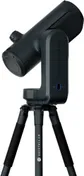 Smart scope with an eyepiece: Nikon electronic eyepiece on 85 mm optics, about $3,679Unistellar Odyssey Pro Smart Telescope85 mm f/3.9 · 0.75° × 0.56° · 8.8 lb7.5Price tier: FlagshipCheck price
A smart telescope and a traditional telescope can both point at Saturn, but they give you two different experiences. A traditional telescope sends live light from the planet to your eye, and you see the rings shimmer in real time. A smart telescope records many short exposures, stacks them and shows the result on your phone. Neither is simply better: each is excellent at something the other does poorly.
This explainer compares the two on what matters before you buy: what you see, which targets each handles, how much you have to learn, what it costs and how easily it travels. We haven’t tested these telescopes ourselves; where a reviewer’s result appears, we name the outlet. Prices are Amazon prices on November 12, 2026, so check today’s price.
Finds, tracks and stacks for you; shows color and faint nebulae on a phone in minutes, even from suburbs. Small apertures and short focal lengths make planets tiny. No eyepiece on most models.
Typical: 30–50 mm, $420–$1,000; 85–152 mm, $2,000–$4,300You look through an eyepiece and push the tube by hand; the phone app tells you where. Planets and the Moon look sharp and live. Galaxies and nebulae are faint gray smudges by eye.
Typical: 114–130 mm, $240–$500The most capable and flexible route: separate mount, telescope, camera and laptop. Steep learning curve and usually $2,000+ for a capable starter kit.
Outside this guide's scopeFull comparison in smart telescope vs traditional telescope.
The core difference: your eye vs a sensor
A traditional telescope is optics only. A mirror or lens collects light, an eyepiece magnifies it, and your eye is the detector. What you see is live, with no delay and no processing. Your eye can’t accumulate light over time, though, so faint objects stay faint and mostly gray.
A smart telescope replaces your eye with a camera sensor. It plate-solves the sky, slews to a target, tracks it and stacks short exposures as they arrive. Because the image builds over minutes, faint nebulae and galaxies appear in color. You watch on a screen, not through glass. Our how smart telescopes work explainer walks through each step.
There’s one hybrid. Unistellar’s Odyssey Pro and eVscope 2 have a Nikon electronic OLED eyepiece. You put your eye to the telescope, but you’re looking at the stacked image from the sensor, not live light.
Planets and the Moon: traditional wins
Planets are small and bright, which favors magnification over light collection. A traditional reflector has a long focal length and swappable eyepieces, so you can push the magnification up. The StarSense Explorer DX 130AZ has a 650 mm focal length and ships with 26× and 65× eyepieces. At 65×, Jupiter’s roughly 45-arcsecond disc appears almost 0.8° wide, bigger than the full Moon looks to the naked eye. Celestron’s spec sheet gives a highest useful magnification of 307× with more eyepieces. The cheaper LT 114AZ includes a 2× Barlow, so 200× is possible out of the box.
Smart telescopes in the 30–50 mm class use 150–260 mm focal lengths and fixed sensors. Jupiter comes out about 20 pixels across on a Seestar S50 Pro and about 12 on an S30 Pro: belts and moons, no fine detail. BBC Sky at Night captured Jupiter and its Galilean moons with the S30 Pro but found the planets too small to show detail. ZWO itself says the Seestars aren’t intended for planets.
For comparison, at 150× through an eyepiece, Jupiter's ~45″ disc appears almost 2° wide, about four times the size the full Moon looks to the naked eye. See best smart telescope for planets.
The Moon is a closer contest. Both types do it well: a traditional scope gives a live, crisp view of craters along the terminator, while a smart scope frames the full disc and saves a sharp image. If planets are your main interest, see best smart telescope for planets, which explains why we often point planet fans to a reflector instead.
Deep sky: smart wins
Galaxies, nebulae and faint clusters are where smart telescopes earn their price. By eye, even a decent traditional scope shows most of them as gray smudges. Space.com found the Andromeda Galaxy faint and the Hercules Cluster (M13) “a faint fuzzy blob” through the LT 114AZ. Light pollution makes this worse, because the sky glow washes out the little contrast your eye has.
A smart telescope stacks light over time and, on every current Seestar and Dwarf model, uses a built-in dual-band filter to cut through skyglow on emission nebulae. The Orion Nebula shows color and structure within minutes even from a suburban yard. Our sky target checker shows, target by target, what you’d see by eye through the DX 130AZ versus a smart scope from your own sky.
Learning curve
Smart telescopes have almost none. You level the tripod, open the app and tap a target. The scope finds it, tracks it and processes the image.
Traditional telescopes used to mean learning star charts and aligning a finder. Celestron’s StarSense telescopes remove most of that: you dock your phone, the app plate-solves the sky through the phone’s camera and on-screen arrows guide you as you push the tube. What remains is the manual part. These are manual alt-az mounts with no tracking, so you nudge the tube to keep a planet centered, and you swap eyepieces and focus yourself. For many people that’s the fun, not a chore.
Cost
| Type | Example | Aperture | Price (Nov 12) |
|---|---|---|---|
| Phone-guided traditional | StarSense LT 114AZ | 114 mm | ~$240 |
| Phone-guided traditional | StarSense DX 130AZ | 130 mm | ~$500 |
| Small smart telescope | Seestar S30 Plus | 30 mm | ~$474 |
| Small smart telescope | Seestar S50 Pro | 50 mm | ~$999 |
| Smart with eyepiece | Odyssey Pro | 85 mm | ~$3,679 |
Dollar for dollar, traditional telescopes give you far more aperture: $500 buys 130 mm in a reflector and 30 mm in a smart scope. You’re paying for the sensor, motors, software and filters in a smart scope, not glass. Our are smart telescopes worth it guide breaks down the full costs.
Portability
Small smart telescopes win easily. A Seestar S30 Plus weighs 1.65 kg without its tripod and the S50 Pro 2.8 kg. The StarSense DX 130AZ is 18 lb complete, with a full-size tripod, and the LT 114AZ is 10.4 lb, though Digital Camera World found its tripod flimsy. The Odyssey Pro sits in between at 4 kg for the telescope (Unistellar) plus a 5.5 lb tripod.
The Sun: same rule for both
Both types can show sunspots, and both need a proper solar filter over the front of the telescope. NASA warns that looking at the Sun through a telescope without one causes instant, severe eye injury. Seestars include a solar filter. For the DX 130AZ, Celestron’s EclipSmart filter for 127–130 mm reflectors (about $23) fits the front of the tube; measure the outer diameter first. Our solar imaging guide covers the safe setup.
Which should you buy?
- You want color photos of nebulae and galaxies, from the suburbs, with no learning curve: a smart telescope. The Seestar S50 Pro is our pick for most people. Check the S50 Pro price.
- You want to see Saturn’s rings and Jupiter’s belts live: a traditional telescope with phone guidance. The DX 130AZ is the stronger choice; Space.com rated it 4 out of 5. Check the DX 130AZ price.
- You want to test the hobby for the least money: the LT 114AZ at about $240, accepting its flimsy tripod and color fringing (Digital Camera World saw a “thick purple line” around Jupiter). Check the LT 114AZ price.
- You want a smart scope but miss the eyepiece, for outreach or family nights: the Odyssey Pro. BBC Sky at Night rated it 4.5 out of 5. Check the Odyssey Pro price.
Plenty of observers end up with both: a cheap reflector for planets and a smart scope for deep sky. If you’re starting out, our best smart telescope for beginners guide narrows the smart side.
How we compared
We set phone-guided traditional telescopes and smart telescopes against the same questions (targets, learning, cost, weight) using maker specs, Amazon prices on November 12, 2026, and named independent reviews. Planet sizes come from our framing math (pixel scale = 206.265 × pixel size in µm ÷ focal length in mm), and eyepiece magnification is focal length divided by eyepiece focal length. Our scores rate traditional telescopes on eyepiece views, not photos. Full method: how we research. Try the telescope matcher to narrow your own choice.
Frequently asked questions
Is a smart telescope better than a regular telescope?
Can you look through a smart telescope?
Which is better for a beginner?
Do traditional telescopes track objects?
Can I photograph through a traditional telescope?
Sources
- Space.com: Celestron StarSense Explorer LT 114AZ review · checked 2026-11-12 — Rated it 3 out of 5; M31 looked faint and M13 'a faint fuzzy blob', while Saturn looked good with the Barlow.
- Space.com: Celestron StarSense Explorer DX 130AZ review · checked 2026-11-12 — Rated it 4 out of 5; the supplied eyepieces top out at 65×, so Mars needed a separate Barlow.
- Digital Camera World: Celestron StarSense Explorer LT 114AZ review · checked 2026-11-12 — Rated it 3 out of 5, saw a 'thick purple line' around Jupiter and found the tripod flimsy.
- BBC Sky at Night: ZWO Seestar S30 Pro review · checked 2026-11-12 — Planets are too small to show any detail, but the reviewer captured Jupiter and its Galilean moons.
- BBC Sky at Night: Unistellar Odyssey Pro review · checked 2026-11-12 — Rated it 4.5 out of 5; magnets hold the dust cap and solar filter.
- NASA: Eclipse safety · checked 2026-11-12 — Viewing the Sun through a telescope without a solar filter over the front causes instant severe eye injury.
Get new guides by e-mail
One short e-mail when Smart Telescope Review publishes a new guide. No spam, no sharing your address, and you can unsubscribe in one click.