Best Smart Telescope for Beginners (2026): 5 Easy Picks and a First-Night Checklist
Our top picks
 Best for most beginners: tripod, case, solar and dual-band filters in the box, about $999ZWO Seestar S50 Pro Smart Telescope50 mm f/5.2 · 2.45° × 1.38° · 6.2 lb8.6Price tier: Mid-rangeCheck price on Amazon
 Best first scope on a budget: complete kit with tripod, case and solar filter, about $474ZWO Seestar S30 Plus Smart Telescope30 mm f/5.3 · 2.66° × 1.5° · 3.6 lb8.2Price tier: BudgetCheck price
 Best for stars and wildlife: 4K sensor and solar filter, tripod extra, about $549DWARFLAB Dwarf 3 Smart Telescope35 mm f/4.3 · 2.93° × 1.65° · 3 lb8.2Price tier: BudgetCheck price
 Best small-space beginner scope: 1.65 kg, 4K and a very wide field, about $664ZWO Seestar S30 Pro Smart Telescope30 mm f/5.3 · 3.99° × 2.24° · 3.6 lb8.5Price tier: Mid-rangeCheck price
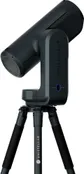 Simplest premium option: 85 mm with autofocus and no collimation, about $2,079Unistellar Odyssey Smart Telescope85 mm f/3.9 · 0.75° × 0.56° · 8.8 lb7.6Price tier: PremiumCheck price
The best thing about a smart telescope for a beginner is what you don’t have to learn. There’s no star alignment, no finder scope and no manual focusing in the dark. You set it on a tripod, open an app, tap a target, and the scope finds it, tracks it and builds a color image on your phone. Within minutes of your first clear night you can be looking at the Orion Nebula or the Andromeda Galaxy.
That doesn’t mean every smart scope is equally easy. Some come with everything in the box, others need a tripod or a solar filter bought separately, and their apps vary in polish. We haven’t tested these ourselves; this guide is built from maker specs, Amazon listings checked on November 12, 2026, and independent reviews, each named where it’s used.
What makes a smart telescope beginner-friendly
- Complete box. A tripod, a solar filter and a light-pollution or dual-band filter mean you can observe the day it arrives.
- Forgiving app. Clear steps, a target list sorted by what’s up tonight, and a scope that keeps working if your phone drops the connection.
- Wide field. A wider field forgives small pointing errors and fits the big, bright showpieces beginners start with.
- Budget that matches the goal. A first scope should be good enough to keep you interested, not so expensive that a cloudy month stings.
The camera takes a short frame, matches the star pattern to a catalog and works out exactly where it's pointing. No star alignment, no finder scope.
Motors slew to your target and follow it as the Earth turns. Alt-az mounts also rotate the image slowly, which the software corrects.
Instead of one long exposure, the scope takes many 10–30 s frames. Frames spoiled by clouds, wind or bumps are rejected.
Each new frame is aligned and averaged into the running image, so noise drops and faint detail appears as you watch: roughly √N better signal-to-noise after N frames.
The app stretches the faint data, removes gradients and denoises, then saves a JPEG (and often FITS/TIFF) to your phone.
See it applied to your sky in the stacking time estimator.
If you want to understand what’s going on inside, read how smart telescopes work. If you’re still deciding between a smart scope and a traditional one, smart telescope vs traditional telescope lays out the trade-off.
1. Seestar S50 Pro: Best for most beginners
The Seestar S50 Pro is the beginner scope with the fewest extra purchases. A carbon tripod, hard case and solar filter come in the box, and the dual-band (H-alpha/OIII) filter is built in, so emission nebulae show color even from suburban skies. The 50 mm aperture collects about 2.8× the light of the 30 mm Seestars, which means faint targets build faster, and ZWO rates the battery at up to 9 hours.
Live Science found the tripod very short and spotted typos in the app; neither stops a beginner, but a taller tripod or a table helps your back. EQ mode exists (with the separately sold TH10 head), but you can ignore it for months. At about $999 it’s the most expensive Seestar, so make sure you’re committed. Check the S50 Pro price.
2. Seestar S30 Plus: Best first scope on a budget
The Seestar S30 Plus is ZWO’s new entry model, launched November 10, 2026. At about $474 it includes the telescope, a mini tripod, a protective case and a magnetic solar filter, and it has the same built-in duo-band filter as its pricier siblings. It runs the same Seestar app, so the learning curve is identical.
What you give up is resolution (a 2K sensor versus 4K on the S30 Pro) and some wide-angle features such as Milky Way panoramas and mosaics. For the Moon, the Sun, the Orion Nebula and bright clusters, a beginner won’t miss them. It’s too new for independent written reviews. Check the S30 Plus price, or see S30 Plus vs S30 Pro before deciding.
3. Dwarf 3: Best for stars and wildlife
The Dwarf 3 is the beginner pick for people who want one gadget for nights and days. It has a 4K Sony Starvis 2 sensor, a wide-angle camera, a dual narrowband filter and a magnetic solar filter, and it auto-tracks wildlife and shoots landscapes in daylight. It weighs 1.35 kg and is IP54-rated.
It’s a little less beginner-proof than a Seestar. Space.com found capture time-consuming and wanted better instructions, and there’s no tripod in the box, so add DWARFLAB’s mini tripod with hydraulic head (about $89) or any sturdy photo tripod. Reviewers measured about four hours per charge. About $549; check the Dwarf 3 price.
4. Seestar S30 Pro: Best for small spaces
The Seestar S30 Pro suits beginners in apartments or anyone who’ll carry the scope to a park. It’s 1.65 kg and has the widest native field here (about 4° × 2.2°), so even the whole Andromeda Galaxy fits in one frame. A 4K main sensor, a 63° wide camera, an anti-dew heater and a solar filter are included.
Fstoppers notes that capture continues if the app disconnects, which is exactly the kind of forgiveness a beginner needs. Digital Camera World flags full reliance on the phone app and frequent data downloads. About $664; check the S30 Pro price.
5. Unistellar Odyssey: Simplest premium option
The Unistellar Odyssey is the easiest Unistellar to run: 85 mm of aperture, autofocus and no collimation. Its free app lists 5,000+ objects and includes NASA and SETI citizen-science campaigns, which makes it a strong family and classroom scope. Digital Camera World rated it 4 out of 5, and noted the battery only recharges with the supplied adapter cable.
Two caveats for beginners. Its 45′ × 34′ field is narrow, so big nebulae and Andromeda don’t fit and there’s no mosaic mode. And the solar filter is extra. At about $2,079 it costs twice the S50 Pro, so buy it for the experience and the science program. Check the Odyssey price.
Which beginner scope fits your sky?
Your sky matters as much as the scope. From a city, the built-in dual-band filters on the Seestars and Dwarf 3 are a real advantage for nebulae. Unistellar uses software light-pollution reduction instead of a physical filter. Our light pollution guide explains what works from bright skies.
Not sure which scope suits you? The telescope matcher asks about budget, sky and targets and ranks every model. The sky target checker shows which objects are up tonight for your scope and sky, and the stacking time estimator suggests how long to let a target build.
Your first-night checklist
- Charge everything during the day. The scope, your phone and a power bank if you have one. Cold nights drain batteries faster.
- Install the app and connect indoors. Pair the scope and run any updates while you have Wi-Fi and light.
- Pick a spot with open sky. Firm, level ground away from porch lights. In the Northern Hemisphere, a view to the south and east gives you the most targets.
- Level the tripod. A minute spent leveling saves frustration later.
- Start bright. The Moon, the Pleiades, the Andromeda Galaxy and, later in the evening, the Orion Nebula are all easy November targets.
- Be patient. Images improve the longer the scope stacks, so don’t judge a nebula on its first few frames.
- Bring a red light. A red LED flashlight keeps your night vision while you find cables.
- Leave the solar filter for daytime, and only point at the Sun with the maker’s filter fitted over the front.
Only a certified full-aperture solar filter, fitted securely over the front of the telescope, is safe. NASA and the AAS warn that eyepiece-end filters are dangerous.
Inspect the film for scratches or pinholes before each use; don't use a damaged filter.
Wind or curious hands can knock a filter off. Kids and pets shouldn't be near a scope pointed at the Sun.
ISO 12312-2 eclipse glasses are for looking at the Sun directly, never through a telescope, binoculars or camera.
Step by step in how to photograph the Sun safely.
Solar viewing is the one place a beginner can get hurt. NASA warns that looking at the Sun through any telescope without a proper filter over the front causes instant, severe eye injury. With a smart scope you look at your phone, not through the optics, but the filter still protects the sensor. Wear ISO 12312-2 eclipse glasses if you want to glance up yourself. Our solar photography guide covers the details.
Buying for a child or a family? Our guide to the best smart telescope for kids covers weight, what’s in the box and supervised solar viewing.
How we chose
We started with all 15 models we cover and weighted ease of use more heavily than in our main ranking: what’s in the box, app clarity, setup steps, field width and reviewers’ comments on instructions. Image quality and value still count, which is why the 114 mm eQuinox 2 (manual focus and collimation) and the 41.6 lb Origin Mark II aren’t here. The full method is on how we research, and the overall ranking is in best smart telescopes of 2026.
Frequently asked questions
What is the easiest smart telescope for a beginner?
Do I need any astronomy knowledge to use a smart telescope?
What should a beginner's smart telescope include in the box?
Can beginners see planets with a smart telescope?
Is a smart telescope good for kids?
Sources
- Fstoppers: ZWO Seestar S30 Pro review · checked 2026-11-12 — Capture continues when the app disconnects; Jupiter appeared as a small dot.
- Live Science: ZWO Seestar S50 Pro review · checked 2026-11-12 — The S50 Pro comes with a solar filter; the reviewer found the tripod very short and typos in the app.
- Space.com: DWARFLAB Dwarf 3 review · checked 2026-11-12 — Found image capture time-consuming and wanted better instructions.
- Digital Camera World: Unistellar Odyssey review · checked 2026-11-12 — Rated it 4 out of 5; the battery only recharges with the supplied adapter cable.
- NASA: Eclipse safety · checked 2026-11-12 — Viewing the Sun through a telescope without a solar filter over the front causes instant, severe eye injury.
Get new guides by e-mail
One short e-mail when Smart Telescope Review publishes a new guide. No spam, no sharing your address, and you can unsubscribe in one click.