Seestar vs Vespera vs Unistellar: Which Smart Telescope Brand Fits You?
Our top picks
 Best value overall: 50 mm, built-in dual-band filter, EQ mode and a 9 h battery (ZWO), about $999ZWO Seestar S50 Pro Smart Telescope50 mm f/5.2 · 2.45° × 1.38° · 6.2 lb8.6Price tier: Mid-rangeCheck price on Amazon
 Widest field and lightest kit: about 4° × 2.2° at 1.65 kg, about $664ZWO Seestar S30 Pro Smart Telescope30 mm f/5.3 · 3.99° × 2.24° · 3.6 lb8.5Price tier: Mid-rangeCheck price
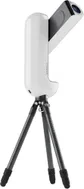 Best premium build: 11 h battery, multi-night projects, five-year warranty, about $2,490Vaonis Vespera 3 Smart Telescope50 mm f/4.9 · 2.6° × 1.4° · 11 lb8.1Price tier: PremiumCheck price
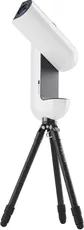 Finest 50 mm sampling: 12.5 MP square sensor and automatic darks, about $2,990Vaonis Vespera Pro 2 Smart Telescope50 mm f/4.9 · 1.6° × 1.6° · 11 lb8.1Price tier: PremiumCheck price
 Most aperture for the money: 114 mm and an 11 h battery (Unistellar), about $2,319Unistellar eQuinox 2 Smart Telescope114 mm f/4 · 0.76° × 0.57° · 15.4 lb7.4Price tier: PremiumCheck price
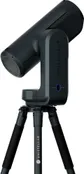 Easiest Unistellar: 85 mm with autofocus and no collimation, about $2,079Unistellar Odyssey Smart Telescope85 mm f/3.9 · 0.75° × 0.56° · 8.8 lb7.6Price tier: PremiumCheck price
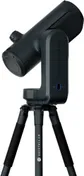 Best for outreach: Nikon electronic eyepiece on the Odyssey optics, about $3,679Unistellar Odyssey Pro Smart Telescope85 mm f/3.9 · 0.75° × 0.56° · 8.8 lb7.5Price tier: FlagshipCheck price
ZWO, Vaonis and Unistellar build smart telescopes that look alike on a spec sheet: a motorized tube, a camera, a phone app and live stacking. They’re built on three different ideas, though. ZWO’s Seestar line packs the most features into the lowest price. Vaonis’ Vespera line sells premium build, long battery life and a long warranty. Unistellar sells aperture, autofocus and, on two models, a real eyepiece you can look into.
This comparison covers the nine current models from those three brands that were on Amazon on November 12, 2026. We haven’t tested these telescopes ourselves: it’s built from maker spec pages and named independent reviews, and where a test result appears we say who ran it. Prices are Amazon prices on that date, so check today’s price before you buy.
The three philosophies in one paragraph each
ZWO Seestar: value and features. Every current Seestar has a built-in duo-band (H-alpha/OIII) filter, a solar filter in the box and an EQ mode with ZWO’s optional TH10 head. The Seestar S50 Pro is the 50 mm flagship at about $999; the S30 Pro is the 30 mm travel model at about $664. The catch is small aperture and full reliance on the phone app.
Vaonis Vespera: build, battery and warranty. The Vespera 3 and Vespera Pro 2, launched April 11, 2026, use a new flat-field apochromatic quadruplet, an 11-hour battery (Vaonis) and a five-year warranty. The Singularity app is polished. There’s no EQ mode on any Vespera, and light-pollution, dual-band and solar filters are all sold separately.
Unistellar: aperture and the eyepiece. Unistellar uses 85 mm and 114 mm Newtonian reflectors, much bigger than anything ZWO or Vaonis sells. The Odyssey has autofocus and needs no collimation, and the Odyssey Pro and eVscope 2 add a Nikon electronic eyepiece. Light pollution is handled in software (“Deep Dark Technology”) rather than with a filter, the field is narrow, and there’s no mosaic mode. The free app runs NASA/SETI citizen-science campaigns.
Spec comparison: all nine models
| Model | Aperture / focal length | Native field | Sensor output | Dual-band filter | EQ mode | Battery (maker) | Weight | Warranty | Price (Nov 12) |
|---|---|---|---|---|---|---|---|---|---|
| Seestar S50 Pro | 50 / 260 mm, f/5.2 | 2.45° × 1.38° | 8.3 MP | Built in | Yes (TH10) | 9 h | 2.8 kg | 2 yr | ~$999 |
| Seestar S30 Pro | 30 / 160 mm, f/5.3 | 3.99° × 2.24° | 8.3 MP | Built in | Yes (TH10 + TC20) | 6 h | 1.65 kg | 2 yr | ~$664 |
| Vespera 3 | 50 / 245 mm, f/4.9 | 2.6° × 1.4° | 8.3 MP | Optional | No | 11 h | 5 kg | 5 yr | ~$2,490 |
| Vespera Pro 2 | 50 / 245 mm, f/4.9 | 1.6° × 1.6° | 12.5 MP | Optional | No | 11 h | 5 kg | 5 yr | ~$2,990 |
| Vespera II | 50 / 250 mm, f/5 | 2.5° × 1.4° | 8.3 MP | Optional | No | 4 h | 5 kg | 3 yr | ~$1,590 |
| Odyssey | 85 / 320 mm, f/3.9 | 45′ × 34′ | ~3.4–4.1 MP | None (software) | No | 5 h | 4 kg | 2 yr | ~$2,079 |
| Odyssey Pro | 85 / 320 mm, f/3.9 | 45′ × 34′ | ~4.1 MP | None (software) | No | 5 h | 4 kg | 2 yr | ~$3,679 |
| eQuinox 2 | 114 / 450 mm, f/4 | 46′ × 34′ | 6.2 MP | None (software) | No | 11 h | 7 kg | 2 yr | ~$2,319 |
| eVscope 2 | 114 / 450 mm, f/4 | 46′ × 34′ | 7.7 MP | None (software) | No | 9 h | 7 kg | 2 yr | ~$3,999 |
Weights are the maker’s figure for the telescope; tripods add more. Battery figures are maker claims, and reviewers usually get less in the cold. One exception runs the other way: Zelpio got about 12 hours from its Vespera 3.
Field of view: the difference you’ll notice first
The biggest practical split isn’t price. It’s how much sky each scope frames. The Seestars and Vesperas see 1.6–4° of sky in one shot. Unistellar sees about 0.75° × 0.56°, less than a third of the width of a Seestar S50 Pro’s frame.
Wider fields fit big nebulae and Andromeda; narrower fields put more pixels on small galaxies. Try any target in the framing calculator.
That decides what you can photograph. The Andromeda Galaxy, about 3° long, fits in one S30 Pro frame and needs two mosaic panels on an S50 Pro or Vespera 3, which both brands’ apps can capture automatically. On a Unistellar it would take a 5 × 3 grid, and Unistellar has no mosaic mode, so in practice you get the core. The Pleiades, about 110 arcminutes across, also overflow a Unistellar frame.
Narrow fields aren’t all bad. Unistellar’s 0.93″ per pixel on the Odyssey and 1.33″ on the eQuinox 2 put far more pixels on small galaxies, planetary nebulae and globular clusters than a Seestar’s 2.30″ (S50 Pro) or 3.74″ (S30 Pro). Jupiter comes out roughly 34–48 pixels across on a Unistellar versus about 12–20 on the Seestars. Check any target against any scope in the framing calculator.
Light pollution and filters
This is where ZWO pulls ahead for suburban buyers. A dual-band filter passes the H-alpha and OIII light that emission nebulae give off and blocks most skyglow, and every Seestar has one built in. Vaonis sells a dual-band filter for the Vespera separately (Vaonis hasn’t confirmed this exact part on the newer models, so check before ordering). Unistellar offers no physical filter at all. It relies on software light-pollution reduction instead, which can’t isolate a nebula’s emission lines at capture the way a dual-band filter does.
If your sky is Bortle 6 or brighter, that difference matters more than aperture for nebulae. Our light pollution guide explains why, and best filters for smart telescopes lists what fits each brand.
Mount and EQ mode
All nine scopes are alt-az, which means the image slowly rotates during a long session and the software has to correct it. ZWO is the only brand of the three that lets you tilt the scope into an equatorial (EQ) mode, using the TH10 head (S50 Pro) or the TH10 and TC20 bundle (S30 series). ZWO says EQ mode allows 60-second exposures. If you plan long projects on faint targets, read EQ mode explained first.
Vaonis answers the same need differently: the Vespera 3 and Pro 2 save a project and resume stacking automatically on later nights, so you can build long integrations across several sessions.
Build, battery, warranty and software
Vaonis is clearly ahead on longevity promises. Five years of warranty on the Vespera 3 and Pro 2 beats two years at ZWO and Unistellar. The 11-hour battery covers a full winter night, and both new Vesperas have automatic anti-fog and IP43 weather resistance. The Vespera Pro 2 also takes automatic master darks (Vaonis), something Zelpio found missing on the Vespera 3, where hot pixels can show.
Reviewers raise a few practical points. Digital Camera World found the Vespera 3’s startup alignment took over five minutes but saw Andromeda’s dust lanes in about ten minutes (not a controlled test). Live Science found the S50 Pro’s included tripod very short and spotted typos in the Seestar app. Space.com reports early Odyssey Pro units shipped defocused and were recalled. BBC Sky at Night found the eQuinox 2’s images “a little soft.”
Unistellar’s software has a strength the others don’t match: the citizen-science program, where owners contribute observations to NASA/SETI campaigns. For families and school groups, that’s a real reason to choose the brand.
Which brand should you buy?
Most buyers: ZWO Seestar. The S50 Pro has 50 mm of aperture, built-in filters, EQ mode, mosaics, a solar filter and a 9 h battery (ZWO) for about $999. Nothing from Vaonis or Unistellar comes close on value, which is also Space.com’s view: it names the S50 Pro its value pick. Check the S50 Pro price. If weight or travel matters more, the S30 Pro has the widest field here at 1.65 kg. Our S30 Pro vs S50 Pro comparison helps you choose.
Buyers who value build and support: Vaonis Vespera 3. If you’d rather pay more once and keep the scope for years, the five-year warranty, 11 h battery and multi-night projects are the reasons to buy it. Budget extra for a dual-band filter if you live under suburban skies. The Pro 2 suits people who crop into small targets; the Vespera II only makes sense at a clear discount. Check the Vespera 3 price.
Small galaxies, science and sharing: Unistellar. The eQuinox 2 has the most aperture per dollar in this group and is Space.com’s best overall pick. The Odyssey is the easiest to run thanks to autofocus. For star parties and outreach, the Odyssey Pro’s Nikon eyepiece is the feature people remember. Check the eQuinox 2 price.
Bigger budgets and a permanent backyard: none of these three. Look at the 152 mm Celestron Origin Mark II in our Origin vs Seestar comparison.
How we chose
We compared every current model from the three brands on the same fields: aperture, focal length and ratio, sensor, computed or maker field of view, filters, mount modes, battery, weight, warranty and Amazon price on November 12, 2026. Specs come from ZWO, Vaonis and Unistellar; test findings come from the outlets named above. Our scores weight image quality 35%, ease of use 25%, portability and build 20% and value 20%. The full method is on how we research, and the telescope matcher filters all of them by sky, budget and targets. For the overall ranking across every brand, see the best smart telescopes of 2026.
Frequently asked questions
Is the Seestar better than the Vespera?
Is Unistellar worth the extra money over a Seestar?
Which smart telescope brands have an EQ mode?
Do Vespera or Unistellar telescopes need a subscription?
Which brand is best for planets?
Sources
- Space.com: The best smart telescopes (updated November 4, 2026) · checked 2026-11-12 — Names the eQuinox 2 best overall, the eVscope 2 for larger budgets, the Seestar S50 Pro for value on small budgets and the Vespera II as its mid-range pick.
- Vaonis: Compare Vespera models · checked 2026-11-12 — Lists Vespera specs and warranties, and marks the original Vespera Pro as a legacy, discontinued model.
- Unistellar: Compare telescopes · checked 2026-11-12 — Unistellar's specs for the Odyssey, Odyssey Pro, eQuinox 2 and eVscope 2, including field of view, battery and limiting magnitude.
- Digital Camera World: Vaonis Vespera 3 review · checked 2026-11-12 — Saw Andromeda's dust lanes in about ten minutes (not a controlled test), found startup alignment took over five minutes, and measured 6 kg with the tripod.
- ZWO: Seestar S50 Pro product page · checked 2026-11-12 — 50 mm f/5.2 four-element ED apochromat, dual-band filter, EQ mode with the TH10 head and up to 9 h of battery (ZWO lab figure).
- BBC Sky at Night: Unistellar Odyssey Pro review · checked 2026-11-12 — Rated it 4.5 out of 5; magnets hold the dust cap and solar filter, battery lasts about 5 hours.
Get new guides by e-mail
One short e-mail when Smart Telescope Review publishes a new guide. No spam, no sharing your address, and you can unsubscribe in one click.