Celestron Origin Mark II vs Unistellar Odyssey Pro: Which $4,000 Smart Telescope Wins?
Our top picks
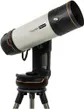 Best for imaging: 152 mm f/2.2 RASA, mosaic mode and a filter drawer, about $4,299Celestron Origin Mark II Intelligent Home Observatory152 mm f/2.2 · 1.32° × 0.75° · 41.6 lb7.5Price tier: FlagshipCheck price on Amazon
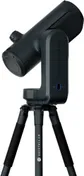 Best for sharing the view: Nikon electronic eyepiece on 85 mm autofocus optics, about $3,679Unistellar Odyssey Pro Smart Telescope85 mm f/3.9 · 0.75° × 0.56° · 8.8 lb7.5Price tier: FlagshipCheck price
 Skip both: 50 mm, built-in filters, solar filter and EQ mode, about $999ZWO Seestar S50 Pro Smart Telescope50 mm f/5.2 · 2.45° × 1.38° · 6.2 lb8.6Price tier: Mid-rangeCheck price
The Celestron Origin Mark II is the better telescope of the two for taking pictures, and the Unistellar Odyssey Pro is the better one for looking through. If you’re weighing Celestron Origin Mark II vs Unistellar Odyssey Pro, the question is whether you want the deepest backyard images money can buy or a scope with an eyepiece that you can actually carry. They cost about $4,299 and $3,679 on Amazon (Nov 12, 2026), so check today’s price and seller, especially with early Black Friday sales live at some retailers.
We haven’t tested either one. This comparison uses Celestron’s and Unistellar’s specs, our own sky math and what named outlets (Space.com, BBC Sky at Night and others) reported. Both are fully automatic: autofocus, GoTo, live stacking and no collimation. They are built on opposite ideas, though. The Origin is a 6-inch f/2.2 astrograph for a backyard. The Odyssey Pro is an 85 mm Newtonian with a Nikon electronic OLED eyepiece.
Quick verdict
| Celestron Origin Mark II | Unistellar Odyssey Pro | |
|---|---|---|
| Optics | 152 mm f/2.2 RASA, 335 mm | 85 mm f/3.9 Newtonian, 320 mm |
| Light grasp | about 3.2× the Odyssey Pro | 1× |
| Sensor | Sony IMX678, 3856 × 2180 | Sony IMX415 (per BBC), about 4.1 MP output |
| Field of view | 1.32° × 0.75° | 45 × 33.6 arcmin (0.75° × 0.56°) |
| Pixel scale | 1.23″ | 0.93″ |
| Eyepiece | None (phone app) | Nikon electronic OLED |
| Mosaic | Yes (since Oct 2026) | No |
| Filters | Drawer for 1.25” and 2”; Nebula filter extra | None; software light-pollution reduction |
| Solar | Not offered | Optional filter, about $199 |
| EQ mode | Optional wedge | No |
| Battery | 97.9 Wh; about 3 h near 0 °C (BBC) | Up to 5 h (Unistellar; BBC agrees) |
| Weight | 18.9 kg (41.6 lb) with tripod | 4 kg scope (Unistellar); 13.2 lb with tripod (Space.com) |
| Warranty | 1 yr listed on Amazon | 2 yr |
| Price (Nov 12) | about $4,299 | about $3,679 |
Space.com’s 2026 roundup lines up with this split: it names the Origin Mark II for deep sky and the Odyssey Pro for versatility. Our own editorial scores come out level at 7.5 each on our weighted formula, because the two trade strengths: the Origin takes image quality (9.2 vs 7.6) and value (6.6 vs 5.8), while the Odyssey Pro takes ease of use (8.8 vs 8.0) and portability (7.6 vs 4.6).
Aperture sets how faint and how sharp you can go; focal ratio sets how fast an image builds. See how smart telescopes work.
Image depth: the Origin is in another league
Two numbers explain it. The Origin’s 152 mm aperture collects about 3.2× the light of 85 mm (light grasp scales with the square of the aperture). And f/2.2 against f/3.9 makes each patch of sky on the sensor about 3.1× brighter per second. The Origin also uses larger 2.0 µm pixels than the Odyssey Pro’s 1.45 µm, which helps it further per pixel.
Our stacking time estimator turns that into planning numbers for a suburban Bortle 6 sky:
- Pinwheel Galaxy (M101): about 2.5 hours on the Origin against about 11 hours on the Odyssey Pro.
- Whirlpool Galaxy (M51): about 13 minutes against about an hour.
- Crab Nebula (M1): about 27 minutes on the Origin with a Nebula filter against about 4.5 hours on the Odyssey Pro, which has no physical filter.
These are estimates from the site’s stated model, not measurements, and real nights vary with transparency, the Moon and altitude. The direction is solid, though, and it matches what reviewers saw. Space.com found 5–10 minute stacks were enough for crisp galaxies on the Origin.
The Odyssey Pro’s strength here is detail on small things. At 0.93″ per pixel it samples more finely than the Origin’s 1.23″, so a small planetary nebula or a globular cluster gets a few more pixels. But it has less light to put in them. On the Odyssey Pro, expect faint galaxies to need patience and long sessions.
Field of view and mosaics
The Origin sees 1.32° × 0.75°, about 2.4× the area of the Odyssey Pro’s 0.75° × 0.56°. Neither is wide. The difference is what you can do about it:
- Andromeda (M31, about 3° long): about a 3 × 2 grid on the Origin and about 5 × 3 on the Odyssey Pro, per our framing calculator. The Origin gained mosaic capture in a free app update (v1.2.1, October 2026, covered by Astronomy.com). Unistellar has no mosaic mode, so in practice you get the core.
- Orion Nebula (M42): about 2 × 2 panels on the Origin and 3 × 3 on the Odyssey Pro. On the Odyssey Pro you’ll shoot the bright centre, not the whole nebula.
- Mid-size galaxies such as M81: these fit in one frame on both, and sit larger in the Odyssey Pro’s frame because of its finer pixels.
BBC Sky at Night notes the Origin’s small sensor under-uses the RASA’s 22 mm image circle, so the optics could in principle frame more sky than the camera records. Compare either scope against any target before you buy.
Wider fields fit big nebulae and Andromeda; narrower fields put more pixels on small galaxies. Try any target in the framing calculator.
The eyepiece: why the Odyssey Pro exists
This is the Odyssey Pro’s reason for being. The Nikon electronic OLED eyepiece shows the live stacked image, so you put an eye to the telescope instead of a phone screen in front of you. At a star party or a family night, that’s what people remember. The Origin has nothing like it.
It isn’t a glass eyepiece, and you’re still looking at a processed, stacked picture. That is the point of a smart telescope, but it’s why the eyepiece costs so much. The Odyssey Pro lists around $4,599, and Amazon’s price (about $3,679) is roughly $1,600 above the Unistellar Odyssey, which shares its optics, sensor and app. For imaging, you’d be paying that gap for the viewing experience alone, and Maximum Astronomy’s video review sums the Pro up as best for outreach rather than astrophotography.
Weight, setup and battery
The Origin is a home observatory. Space.com puts the complete setup at 41.6 lb, so it’s a two-trip carry, it won’t fly in carry-on luggage, and its motors are audible. BBC Sky at Night also found you can’t pause and resume a session. The Odyssey Pro is more manageable: Unistellar lists 4 kg for the scope (Digital Camera World lists 5 kg), and Space.com weighed scope plus tripod at 13.2 lb, roughly a third of the Origin. Unistellar’s Odyssey backpack, which fits the Pro, is cabin size.
Battery is where winter bites. Unistellar quotes up to 5 hours, and BBC Sky at Night’s Odyssey Pro review agrees. Celestron’s 97.9 Wh LiFePO4 battery is quoted at 6+ hours by Space.com, but BBC measured about 3 hours near 0 °C. For long Origin sessions, think mains power. The Odyssey Pro also has a USB-A port that can charge your phone, which matters when the phone runs the app.
Reliability notes also belong here. Space.com reports that early Odyssey Pro units shipped defocused and were recalled, and that the scope doesn’t park itself when switched off. The Origin listing was sold by Adorama on Nov 12, with a 1-year limited warranty on Amazon that we couldn’t confirm on Celestron’s site. Unistellar lists 2 years.
Filters, light pollution, solar and EQ mode
Light pollution. The Origin has a filter drawer for 1.25-inch and 2-inch filters, and Celestron’s Nebula filter for Origin (about $219) is the upgrade suburban owners should budget for. It helps emission nebulae and does nothing for galaxies. The Odyssey Pro has no filter, only Unistellar’s software light-pollution reduction, which is why nebulae from a bright sky are slow. Our light pollution guide explains why filters matter more than aperture for nebulae.
The Sun. The Odyssey Pro takes Unistellar’s Smart Solar Filter (about $199, held on by magnets per BBC), so daytime sunspots are possible. Celestron doesn’t offer solar imaging for the RASA-based Origin. Never point it at the Sun.
EQ mode. The Origin can use Celestron’s equatorial wedge (about $410), but the Amazon bullet points don’t name the Mark II, so confirm compatibility with Celestron first. The Odyssey Pro is alt-az only and corrects field rotation in software. Our EQ mode explainer covers when a wedge is worth it.
App and software
The Origin app is powered by SkySafari, free on iOS and Android, with no in-app purchases that we found. It has gained dithering and mosaics in 2026 updates. Unistellar’s app is also free, covers more than 5,000 objects and runs NASA/SETI citizen-science campaigns, a real draw for families, schools and clubs. We found no subscription for either scope.
How to choose
Buy the Origin Mark II if:
- Your goal is images of faint galaxies and nebulae, and you want them in minutes rather than hours.
- You have a patio, backyard or shed, and a mains socket nearby.
- You’ll use mosaics for big targets and may add a Nebula filter for suburban skies.
Check the Origin Mark II price.
Buy the Odyssey Pro if:
- You want to look into an eyepiece, share views with a group, or do outreach.
- You’ll carry the scope to parks, dark sites or club nights.
- Citizen science and a simple, automatic workflow matter more than image depth.
Who should skip both
Skip both if you’d rather spend about a quarter of the money. The Seestar S50 Pro (about $999) has a 2.45° × 1.38° field, built-in dual-band and solar filters and EQ mode with an optional head. It’s far less deep than the Origin, but it frames more sky than either of these, and our Origin vs Seestar comparison weighs that trade in detail. Skip both too if planets are your goal: neither is a planetary scope, Space.com calls the Odyssey line not ideal for planets, and Digital Camera World found Jupiter blurred on the Pro (seeing may have been to blame). A traditional telescope does better there, as smart vs traditional telescopes explains.
If you’re also weighing Vaonis, Seestar vs Vespera vs Unistellar covers every brand, and the best smart telescopes of 2026 ranks the whole field.
How we compared
We lined up maker specs, Amazon prices on November 12, 2026 and the independent findings named above, and noted where sources disagree (Odyssey Pro weight, Origin battery life). Field of view, pixel scale and framing come from the site’s tool math, and stacking times from the integration estimator’s stated assumptions. Black Friday sales may move prices, so treat ours as a snapshot. Scores weight image quality 35%, ease of use 25%, portability and build 20% and value 20%. Details are on how we research, and the telescope matcher filters every model by sky, budget and targets.
Frequently asked questions
Is the Celestron Origin Mark II better than the Unistellar Odyssey Pro?
Does the Celestron Origin Mark II have an eyepiece?
Can the Odyssey Pro or the Origin Mark II photograph the Sun?
Which is better under light-polluted skies?
How long do the batteries last?
Is the Odyssey Pro worth it over the cheaper Odyssey?
Sources
- Space.com: Celestron Origin Intelligent Home Observatory Mark II review · checked 2026-11-12 — Found 5–10 minute stacks enough for crisp galaxies; noted audible motors and a 41.6 lb complete weight.
- BBC Sky at Night: Celestron Origin Mark II review · checked 2026-11-12 — Rated it 4.5 out of 5; measured about 3 h of battery near 0 °C, noted the small sensor under-uses the 22 mm image circle and that sessions can't be paused and resumed.
- Astronomy.com: Celestron Origin's mosaic mode brings wide-field astrophotography to the biggest smart telescope · checked 2026-11-12 — Mosaic capture arrived on the Origin in a free app update in October 2026.
- Celestron: Origin technology · checked 2026-11-12 — 6-inch f/2.2 Rowe-Ackermann Schmidt Astrograph with autofocus, dew heater and a filter drawer.
- BBC Sky at Night: Unistellar Odyssey Pro review · checked 2026-11-12 — Rated it 4.5 out of 5; magnets hold the dust cap and solar filter, battery lasts about 5 hours.
- Unistellar: Compare telescopes · checked 2026-11-12 — Unistellar's specs for the Odyssey and Odyssey Pro, including field of view and battery.
- Space.com: The best smart telescopes (updated November 4, 2026) · checked 2026-11-12 — Picks the Origin Mark II for deep sky and the Odyssey Pro for versatility.
Get new guides by e-mail
One short e-mail when Smart Telescope Review publishes a new guide. No spam, no sharing your address, and you can unsubscribe in one click.