The Best Winter Targets for Smart Telescopes: Orion, the Pleiades, the Rosette and More
Our top picks
 Best for winter nebulae: 50 mm with a built-in dual-band filter, about $999ZWO Seestar S50 Pro Smart Telescope50 mm f/5.2 · 2.45° × 1.38° · 6.2 lb8.6Price tier: Mid-rangeCheck price on Amazon
 Best wide field: fits the Pleiades, Andromeda and the California Nebula in one frame, about $664ZWO Seestar S30 Pro Smart Telescope30 mm f/5.3 · 3.99° × 2.24° · 3.6 lb8.5Price tier: Mid-rangeCheck price
 Best value: 4K sensor and dual narrowband filter, about $549DWARFLAB Dwarf 3 Smart Telescope35 mm f/4.3 · 2.93° × 1.65° · 3 lb8.2Price tier: BudgetCheck price
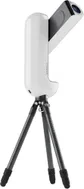 Best for long cold nights: 11-hour battery and automatic anti-fog, about $2,490Vaonis Vespera 3 Smart Telescope50 mm f/4.9 · 2.6° × 1.4° · 11 lb8.1Price tier: PremiumCheck price
Winter is the best season to own a smart telescope. The nights are long, Orion is high in the south by mid-evening, and the sky between Taurus and Monoceros is packed with bright nebulae and clusters that suit 30–50 mm scopes. The catch is the cold: batteries fade, dew forms and fingers stop working on touchscreens.
This guide covers the winter targets in our tool catalog, plus a few autumn carryovers still high early in the evening, with each target’s size, what to expect and which scopes frame it. It’s research-based: we haven’t tested these telescopes ourselves. Sizes and magnitudes are rounded catalog values from the SEDS Messier data and SEDS NGC pages; framing and time estimates come from our own tools. Prices are US Amazon prices on November 12, 2026.
Winter targets at a glance
The table shows framing on three representative scopes and an estimated stacking time for a Seestar S50 Pro under a Bortle 6 suburban sky.
| Target | Size | Seestar S30 Pro | Seestar S50 Pro | Origin Mark II | Time (S50 Pro, Bortle 6) |
|---|---|---|---|---|---|
| Orion Nebula M42 · Emission nebula · mag 4 · SB 13 | 85′ × 60′ | Frames well | Frames well | 2×2 mosaic | 6 min |
| Crab Nebula M1 · Supernova remnant · mag 8.4 · SB 11.6 | 6′ × 4′ | Tiny in the frame | Fits, but small in the frame | Fits, but small in the frame | 1.7 h |
| M78 M78 · Reflection nebula · mag 8.3 · SB 12.2 | 8′ × 6′ | Tiny in the frame | Fits, but small in the frame | Fits, but small in the frame | 4 h |
| Rosette Nebula NGC 2237 · Emission nebula · mag 9 · SB 17.9 | 80′ × 60′ | Frames well | Frames well | 2×2 mosaic | 1.7 h |
| California Nebula NGC 1499 · Emission nebula · mag 6 · SB 15.1 | 145′ × 40′ | Frames well | 2×1 mosaic | 3×1 mosaic | 3.6 h |
| Horsehead Nebula B33 / IC 434 · Dark nebula | 8′ × 6′ | Tiny in the frame | Fits, but small in the frame | Fits, but small in the frame | 3.6 h |
| Eskimo Nebula NGC 2392 · Planetary nebula · mag 9.1 · SB 8.2 | 0.8′ × 0.7′ | Tiny in the frame | Tiny in the frame | Tiny in the frame | 4 h |
| Pleiades M45 · Open cluster · mag 1.6 · SB 11.5 | 110′ × 110′ | Frames well | 1×2 mosaic | 2×3 mosaic | 8 min |
| M35 M35 · Open cluster · mag 5.3 · SB 12.3 | 28′ × 28′ | Fits, but small in the frame | Frames well | Frames well | 8 min |
Estimates use the dual-band filter on emission nebulae. Try your own sky and scope in the sky target checker.
Times are planning estimates from our integration-time estimator, not measurements. Darker skies cut them; brighter skies stretch them. Seasons are for Northern Hemisphere evenings.
The showpieces: start here
Orion Nebula (M42)
Size: about 85 × 60 arcminutes. Type: emission nebula, magnitude 4.0.
The best first deep-sky target for any smart telescope. Color and structure appear within minutes, even from a city, and the estimator puts a pleasing result at about 6 minutes on an S50 Pro from Bortle 6. It frames well on every 30–50 mm scope: it fills a little over half the long side of an S50 Pro frame and about a third on the wider S30 Pro. The bright core saturates quickly, so don’t be surprised if the center looks blown out. Check M42 framing.
Pleiades (M45)
Size: about 110 arcminutes. Type: open cluster, magnitude 1.6.
The bright blue stars show instantly. The faint reflection nebulosity around them needs dark skies and an hour or more, and a dual-band filter won’t help because it’s reflected starlight. At nearly 2° across, it fits one frame on the Seestar S30 Pro but needs two panels on the S50 Pro, S30 Plus, Dwarf 3 and Vespera 3. Check M45 framing.
M35
Size: about 28 arcminutes. Type: open cluster, magnitude 5.3.
A rich cluster in Gemini with the compact cluster NGC 2158 beside it. It frames well on 50 mm scopes and looks good in about 8 minutes. On the S30 Pro it’s a bit small in the frame. Check M35 framing.
Nebulae that love a dual-band filter
Rosette Nebula (NGC 2237)
Size: about 80 × 60 arcminutes. Type: emission nebula.
A large winter favorite in Monoceros. Without a filter it’s a faint ring; with a dual-band filter it becomes a showpiece. It fits a single frame on every 30–50 mm smart scope, and the estimator gives about 1.7 hours on an S50 Pro from Bortle 6 with the built-in filter. The Celestron Origin Mark II, with its much narrower field, needs a 2 × 2 mosaic. Check Rosette framing.
California Nebula (NGC 1499)
Size: about 145 × 40 arcminutes. Type: emission nebula.
A long, faint strip of hydrogen-alpha in Perseus. It fits the S30 Pro’s frame and just squeezes into the Dwarf 3 and S30 Plus, but needs two panels on the S50 Pro and Vespera 3. Plan on a wide field plus a dual-band filter (about 3.6 hours on the S50 Pro from Bortle 6), or skip it from bright city skies. Check California framing.
Horsehead Nebula (B33 / IC 434)
Size: about 8 × 6 arcminutes. Type: dark nebula.
Famous and small. The horse’s head is a dark cloud silhouetted against the faint red glow of IC 434, so you need an H-alpha-passing filter and an hour or more. On a 50 mm scope it’s small in the frame; the estimator gives about 3.6 hours on the S50 Pro from Bortle 6. Frame it with the nearby Flame Nebula for a fuller picture. Check Horsehead framing.
Crab Nebula (M1)
Size: about 6 × 4 arcminutes. Type: supernova remnant, magnitude 8.4.
Small and fairly faint. It’s around 156 pixels across on an S50 Pro and a smudge on 30 mm scopes; filaments need larger aperture and long integration. Expect about 1.7 hours on the S50 Pro from Bortle 6 with the dual-band filter. Check M1 framing.
Small and tricky
M78
Size: about 8 × 6 arcminutes. Type: reflection nebula, magnitude 8.3.
A blue reflection nebula in Orion. Dual-band filters don’t help reflection nebulae, so this one depends on dark skies; the estimator puts it at about 4 hours on the S50 Pro from Bortle 6. Check M78 framing.
Eskimo Nebula (NGC 2392)
Size: under 1 arcminute. Type: planetary nebula, magnitude 9.1.
Bright but tiny: about 21 pixels across on a Seestar S50 Pro and 13 on the S30 Pro. Expect a small blue dot, which is a fun find rather than a portrait. Larger-aperture scopes such as the Origin do better. Check Eskimo framing.
Autumn carryovers still up after dark
- Andromeda Galaxy (M31): about 3° long. The bright core shows in minutes; the full disc with dust lanes needs a wide field or a mosaic and an hour or more. It fits one S30 Pro frame and needs two panels on the S50 Pro or Vespera 3. Check M31 framing.
- Double Cluster (NGC 869 / NGC 884): two clusters side by side, about 1° in total. Ideal for every 30–50 mm scope. Check framing.
- Heart and Soul (IC 1805 / IC 1848): big, faint emission nebulae that need a dual-band filter and long stacks (about 3.6 hours each on the S50 Pro from Bortle 6). The Heart is about 2.5° across, a mosaic target for almost every smart scope; the Soul fits a single S30 Pro frame. Check Heart framing.
- The Moon: winter Full Moons ride high, and the full disc fits in one frame on every 30–50 mm smart scope. Use bright-Moon nights for the Moon and clusters, and save nebulae for darker weeks. Check Moon framing.
Which scope frames winter best
| Target | Seestar S30 Pro | Seestar S50 Pro | Dwarf 3 | Vespera 3 |
|---|---|---|---|---|
| Orion Nebula | Frames well | Frames well | Frames well | Frames well |
| Pleiades | Frames well | 2 panels | 2 panels | 2 panels |
| Rosette | Frames well | Frames well | Frames well | Frames well |
| California | Frames well | 2 panels | Fills the frame | 2 panels |
| Andromeda | Frames well | 2 panels | 2 panels | 2 panels |
| Horsehead | Tiny | Small | Small | Small |
Seestar S50 Pro (about $999): 50 mm of aperture, the most among the Seestar and Dwarf picks, plus a built-in dual-band filter, which matters for the Rosette, Horsehead and Heart. Check the S50 Pro price.
Seestar S30 Pro (about $664): the widest native field here, about 4° × 2.2°, so the Pleiades, Andromeda and California fit without mosaics. Its 30 mm aperture collects less light, and small targets like the Horsehead look tiny. Check the S30 Pro price. Torn between them? Read S30 Pro vs S50 Pro.
Dwarf 3 (about $549): a field between the two Seestars, a dual narrowband filter and a 2 × 2 mosaic mode. Budget for a tripod.
Vespera 3 (about $2,490): an 11-hour battery and automatic anti-fog suit long winter nights, and its multi-night mode resumes a target automatically. Filters cost extra, which matters for winter’s emission nebulae.
Cold-weather tips
- Plan for shorter battery life. Maker figures are lab numbers. AstroBackyard notes the S50 Pro’s battery drops in the cold, BBC Sky at Night got just over four hours from the Dwarf 3 near freezing, and BBC measured about three hours from the Origin Mark II near 0 °C. Zelpio got about 12 hours from the Vespera 3 in use.
- Run from a power bank. The Anker 737 power bank (24,000 mAh, about $99) is big enough to run a 30–50 mm Seestar or Dwarf through a long night. Check your manual for supported USB-C input; Vaonis, Unistellar and Celestron Origin use their own batteries and chargers.
- Keep your phone warm. The app runs on your phone all night. Keep it in an inside pocket between checks, and top it up from a second bank such as the UGREEN Nexode 20,000 mAh.
- Fight dew. The S30 Pro has an anti-dew heater and the Vespera 3 automatic anti-fog. For other scopes, a dew shield slows dew forming: the Neo3D dew shield kit for the S30 series or the MASK PRO kit for the Dwarf 3.
- Bring the scope in slowly. Leave it in its case when you come inside so condensation forms on the case, not the optics.
- Use a red light. A dimmable red flashlight such as the Celestron Night Vision light helps with cables and levels without ruining your night vision.
How we chose
Targets come from our tool catalog’s winter list, which uses rounded SEDS catalog sizes and magnitudes and an editorial difficulty rating. Framing comes from each scope’s sensor size and focal length, and times from our background-limited integration-time estimator. Check your own sky with the sky target checker. Our process is on how we research. For city-specific advice see smart telescopes in the city, and if you’re buying one as a present this season, our gift guide and best smart telescope for travel can help.
Frequently asked questions
What is the best winter target for a smart telescope?
Can a smart telescope see the Horsehead Nebula?
Do the Pleiades fit in a Seestar's field of view?
How do I keep a smart telescope running in the cold?
Is Andromeda still visible in winter?
Sources
- SEDS: Messier object data table · checked 2026-11-12 — Catalog magnitudes and apparent sizes for Messier objects, the basis for the sizes quoted in this guide.
- AstroBackyard: Seestar S50 Pro review · checked 2026-11-12 — AstroBackyard notes the S50 Pro's battery life drops in cold weather.
- BBC Sky at Night: DWARFLAB Dwarf 3 review · checked 2026-11-12 — BBC Sky at Night got over four hours from a single charge in near-zero temperatures.
- Zelpio: Vaonis Vespera 3 review · checked 2026-11-12 — Zelpio got about 12 hours of battery from the Vespera 3 in use and notes it lacks automatic dark frames.
- BBC Sky at Night: Celestron Origin Mark II review · checked 2026-11-12 — BBC Sky at Night measured about three hours of battery life near 0 °C.
Get new guides by e-mail
One short e-mail when Smart Telescope Review publishes a new guide. No spam, no sharing your address, and you can unsubscribe in one click.